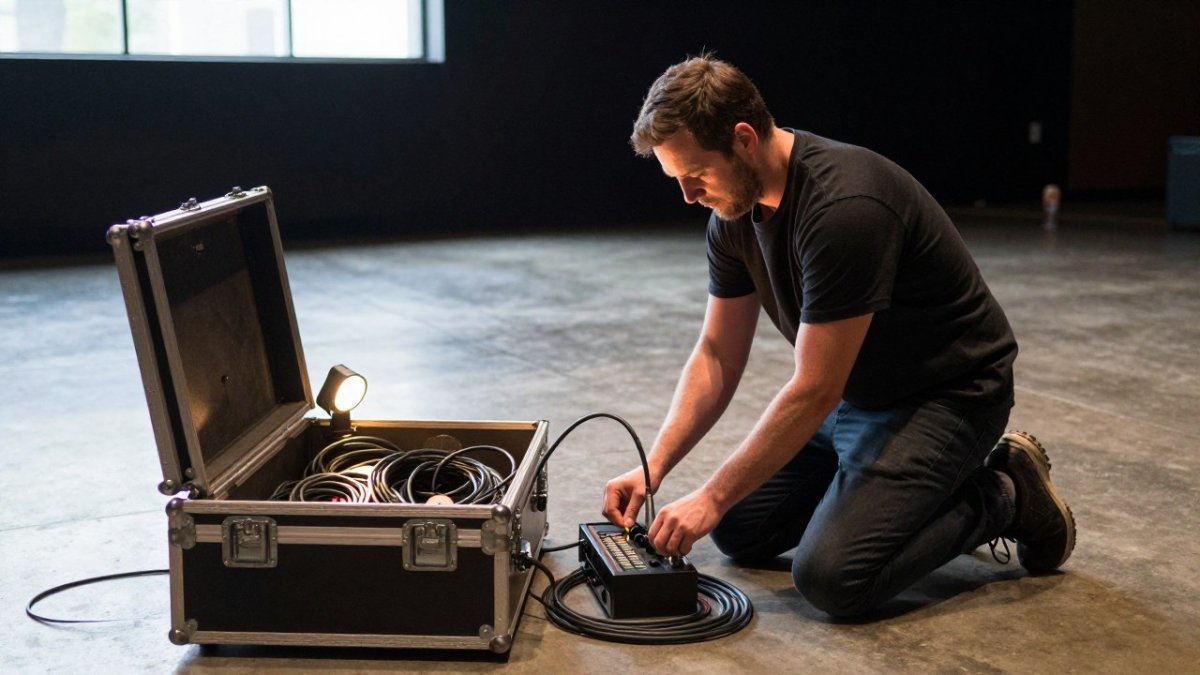
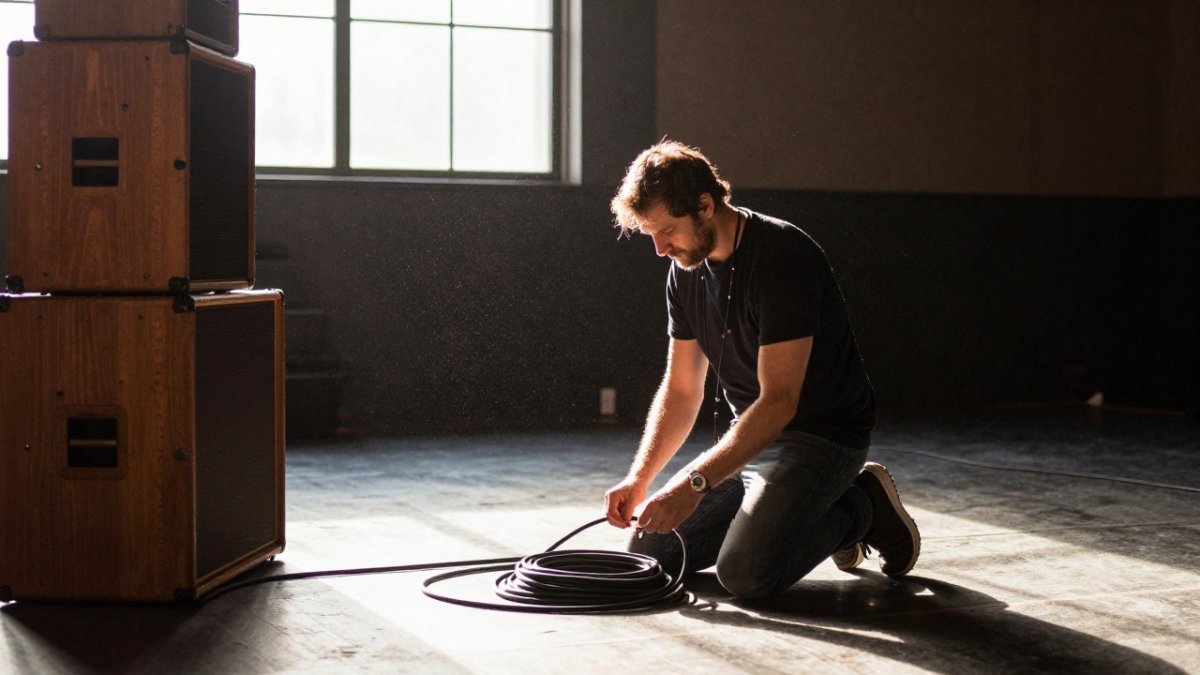
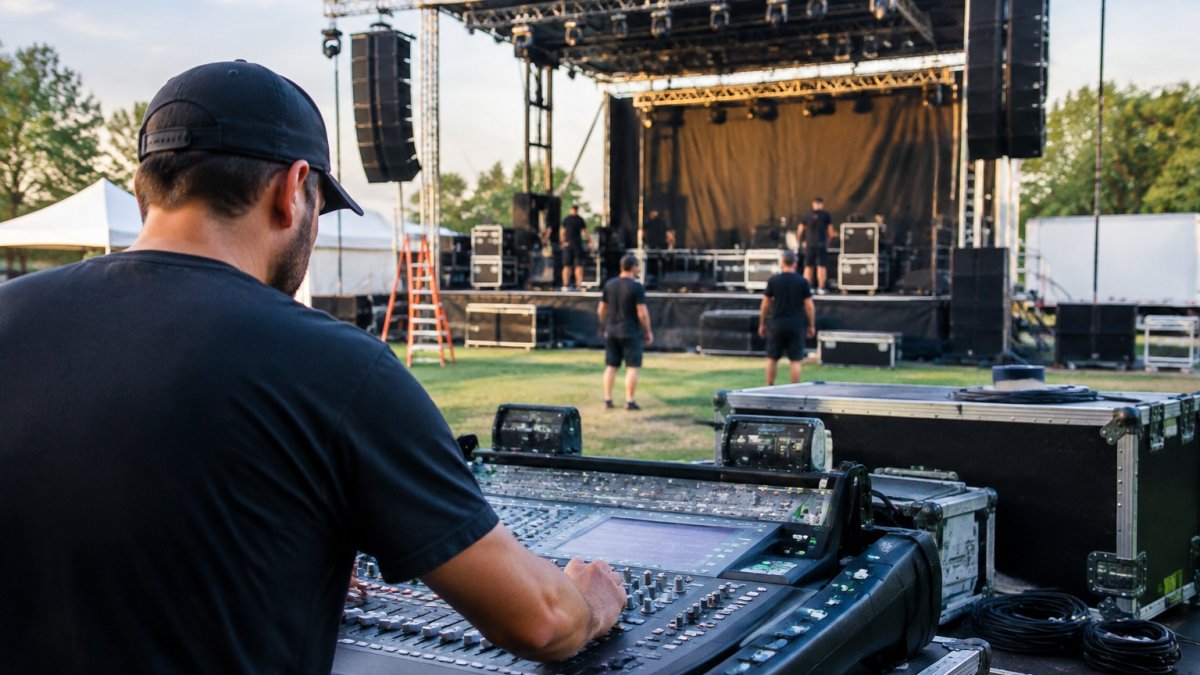
What Does Event Production Management for University Events Involve?
Last Updated: November 15, 2026
Quick Summary
Event production management for university events is the coordination of planning, scheduling, staffing, equipment, vendors, and campus approvals so a ceremony or performance runs on time and without surprises. It is less about gear and more about choreography between departments, since a single ceremony can involve the registrar, facilities, campus police, the provost's office, IT, and student life.
- Build a university event production checklist early and share it widely across every department.
- Backward-plan your timeline in four phases: approvals, design, build, and show and strike.
- Approvals are the longest phase on campus, typically running 8 to 16 weeks out.
- Confirm staging load ratings and deck size before you book the second act.
- Assign one production lead who owns the run of show and can make a call in the moment.
Table of Contents
- What University Event Production Management Actually Covers
- Your University Event Production Checklist
- Building an Event Production Timeline Template for Campus Events
- Campus Event AV Production: Audio, Lighting, and Staging
- University Event Production Equipment: What to Specify
- Coordinating Departments, Vendors, and the Run of Show
- Booking Production Management for Your Next Campus Event
- Frequently Asked Questions
What University Event Production Management Actually Covers
Event production management for university events is the coordination of planning, scheduling, staffing, equipment, vendors, and campus approvals so a ceremony or performance runs on time and without surprises.
Where Campus Events Differ From Corporate Events
Corporate events usually have one decision-maker. Campus events rarely do.
The California Polytechnic State University case study on event process structure identifies the core components shared among event managers: structured scheduling, risk management, and logistical coordination.
That's why production management on a campus is less about gear and more about choreography between departments.
Your University Event Production Checklist
A university event production checklist is the document that keeps a multi-department ceremony from falling apart. Build it early and share it widely. Here is the checklist we work from:
- Event objectives and success measures defined
- Venue confirmed and holds released
- Campus approvals and permits submitted
- Budget approved with a contingency line
- AV and staging scope locked
Building an Event Production Timeline Template for Campus Events
An event production timeline template is a backward-planned schedule that starts at show time and works in reverse. For a campus ceremony, we build it in four phases, approvals, design, build, and show, and then attach a named owner and a hard date to every line. The template only works if it is shared, versioned, and reviewed at a standing weekly call from the first approval through strike.
Phase 1: Approvals (Typically 8-16 Weeks Out)
This is the longest phase on a campus and the one most planners underestimate. Nothing gets designed, ordered, or scheduled until the approval chain clears.
- Event request submitted to the scheduling office or registrar; confirm the date against the academic calendar, exam periods, and break weeks
- Venue hold converted to a confirmed reservation; release any backup holds so other groups can book
- Facilities work order opened for power, HVAC, rigging points, and custodial coverage
- Campus police and risk management review of the crowd, traffic, and emergency plan
- Accessibility sign-off on seating, ramps, assistive listening, and accessible parking
- Insurance certificate and vendor agreements routed through procurement
Watch out: a facilities work order submitted inside two weeks of show date often lands in a queue behind routine maintenance, and the power drop you assumed would be there is not.
Phase 2: Design (6-10 Weeks Out)
Design turns the approved event into a technical plan.
- Run of show drafted with cue numbers, owners, and durations
- Stage plot and input list produced from the run of show
- AV, lighting, and staging scope locked and quoted
- Vendor contracts signed with load-in windows written into each agreement
- Staffing call published, crew count, call times, and who reports to whom
- Regalia and stage party deadline set, the date the lineup freezes and no names change
Phase 3: Build (2-4 Weeks Out)
Build is where paper becomes gear and people.
- Equipment pull sheet finalized and cross-checked against the input list
- Load-in schedule distributed to facilities, vendors, and campus police
- Rehearsal scheduled, walk the cues, test the mics, and time the processional
- Volunteer and student crew briefed on roles, radio channels, and escalation
- Contingency plan reviewed for weather, power loss, and a no-show vendor
Phase 4: Show and Strike (Show Day Through +1 Week)
- Load-in and sound check completed against the published window
- Show called by a single production lead on a clear channel
- Strike completed and the venue returned to its pre-event condition
- Post-event review scheduled within one week, while details are fresh
- Budget variance and incident log closed out
Campus-Specific Milestones to Add to the Template
Standard corporate timelines skip the milestones that actually cause campus delays. Add these:
- Academic calendar lock, confirm no conflicting exam or break dates
- Facilities work order, power, HVAC, and rigging requests
- Campus police review, crowd and traffic plan
- Accessibility sign-off, seating, ramps, and assistive listening
- Regalia and stage party deadline, the date the lineup freezes
- Graduation rehearsal, walk the cues before show day
Put a name and a date next to every line. An unassigned milestone is a missed milestone.
Here is how the four timeline phases map to timing and the work each one covers.
| Phase | Timing | Key work |
|---|---|---|
| Approvals | Typically 8-16 weeks out | Event request, venue hold, facilities work order, police review |
| Design | 6-10 weeks out | Run of show, stage plot, input list, vendor contracts |
| Build | 2-4 weeks out | Equipment pull sheet, load-in schedule, rehearsal, crew briefing |
| Show and strike | Show day through +1 week | Load-in, sound check, show call, strike, post-event review |
Campus Event AV Production: Audio, Lighting, and Staging
Campus event AV production starts with one question: does the room need speech intelligibility or music coverage? A lecture hall and a concert venue demand different systems, and campuses have both.
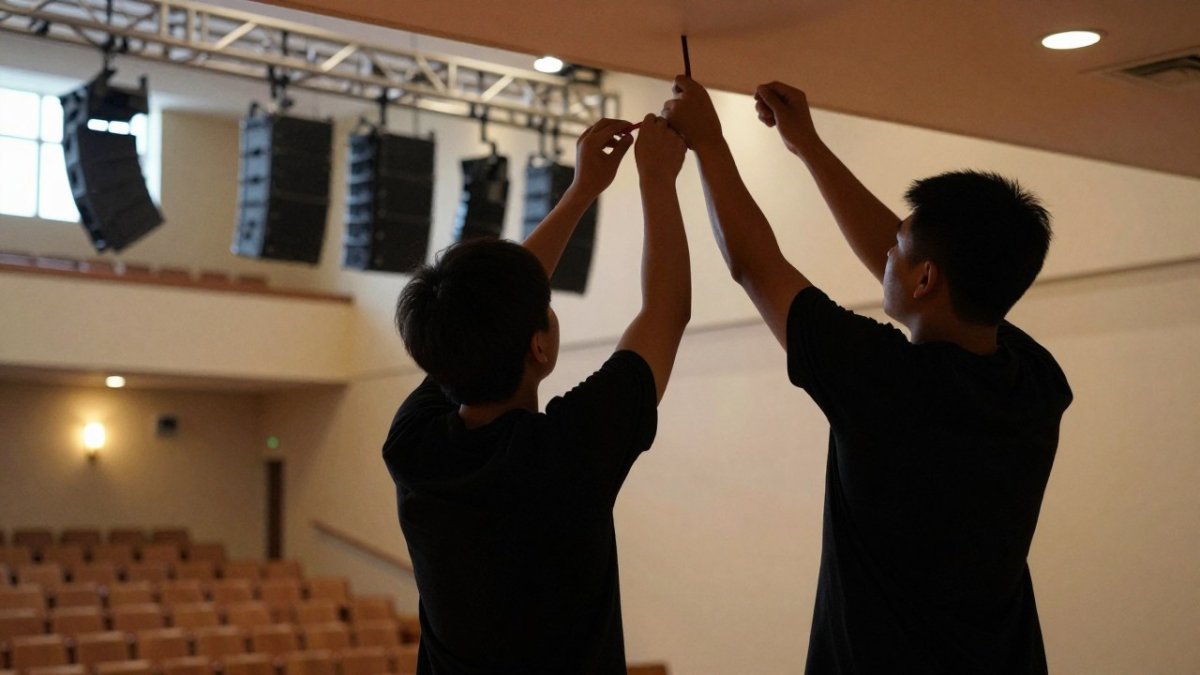
Audio: Build the Input List First
Speech-first events need even coverage and clear vocals. Ceremonies outdoors need delay speakers so the back rows hear the same thing as the front. The practical way to get there is to write the input list before the gear list.
A typical commencement input list looks like this:
- Podium mic (wired, primary) plus a backup podium mic on a separate channel
- Two handheld wireless mics for the emcee and stage party
- Lavalier for the keynote speaker
- Playback channels for the processional, recessional, and any video
- A talkback or cue channel for the production lead
From that list you can size the console, count the wireless frequencies, and plan the monitor mix. Watch out: wireless frequency coordination is a real constraint on a crowded campus, residence hall Wi-Fi, other events, and nearby broadcasters all compete for the same spectrum, so scan the room during load-in rather than assuming the default frequencies will hold.
Lighting: Wash for Camera and Sightlines, Then Accent
Lighting follows the same logic as audio. Wash the stage for camera and audience sightlines, then add accents only where they earn their place. For a ceremony, that usually means a front wash on the stage party, a backlight to separate them from the backdrop, and a controlled house-light level so the audience can read programs without washing out the stage.
Staging: Confirm Load Ratings Before the Second Act
Staging is where campuses get surprised. A riser that works for a panel discussion may not carry a full choir. Confirm load ratings and deck size before you book the second act, not after. Check three things on every staging plan: the deck's rated load per square foot, the stair and ramp configuration for accessibility, and the skirting and backdrop that make the stage read as intentional on camera.
Staffing and Show Calling
Gear without operators is a very expensive table. A campus ceremony typically needs a front-of-house engineer, a monitor or stage engineer, a lighting operator, a stagehand crew for load-in and strike, and one production lead calling the show on a clear channel. The production lead owns the run of show, the cue sheet, and the call. Volunteer and student crews can fill stagehand and follow-spot roles with a briefing and a rehearsal.
The Run-of-Show and Cue-Sheet Link
Every AV decision should trace back to a cue. The run of show lists what happens and when; the cue sheet lists who makes it happen and on what channel. When the two documents disagree, the cue sheet wins on show day and the run of show gets corrected afterward. Build the stage plot, input list, and lighting plot from the same run of show so the paperwork stays consistent from design through strike.
University Event Production Equipment: What to Specify
University event production equipment lists should be built from the run of show backward, not from a rental catalog forward. Every line item should answer a cue in the show.
Specify these categories:
- Audio - microphones, mixing console, speakers, monitors
- Lighting - stage wash, spot fixtures, control board
- Staging - decking, risers, stairs, skirting
- Backline - instruments and amps if the show needs them
- Power and cabling - distro, runs, and backups
- Video - screens, projection, and switching if used
Watch out: the most common equipment failure we see is a spec sheet that lists gear without listing who operates it.
For a deeper list, use our live event equipment rental checklist before you request gear.
Coordinating Departments, Vendors, and the Run of Show
The run of show is the master document. It lists every cue, who owns it, and when it happens. If two people have different versions of the run of show, you have two different events.
Handoffs That Break Events
Most failures happen at the seams, not inside a department. These handoffs break most often:
- Facilities unlocks the building, but AV doesn't know when
- The stage party lineup changes after the cue sheet is printed
- A vendor arrives during the ceremony because load-in wasn't scheduled
- The emcee gets a different script than the one in the prompter
Assign one production lead who owns the run of show and can make a call in the moment. For help juggling multiple vendors, read our guide on coordinating multiple event vendors.
Booking Production Management for Your Next Campus Event
The best time to bring in production management is before the approvals start, not the week of the show.
AudioBahn Productions handles scheduling, payments, and contract administration alongside concert sound, stage lighting, staging, backline, and equipment rentals.
Our team serves the Michiana and Great Lakes region, and we travel for the right event. Read more about our live event production service or see what goes into stage rental for campus events.
Planning a commencement, assembly, or campus concert? Bring us in early and we'll build the timeline, the equipment list, and the run of show around your event.
Get a free quote to start the conversation.
Frequently Asked Questions
What does an event production manager do for a university event?
A production manager owns the technical and operational side of the event: scheduling load-in and load-out, confirming audio, lighting, and staging specifications, writing the run of show, and coordinating vendors and campus departments. The university's event office usually handles guest lists and promotion, while production management handles what happens on stage and backstage. Clear division of duties early prevents the most common failure: two people assuming someone else booked the stage.
What equipment is needed for a university event?
Most campus events need a sound system sized to the room, microphones for presenters and panels, stage lighting with enough front light for video, and a stage or riser. Larger ceremonies add wireless mics, confidence monitors, and recording. Build your university event production equipment list from the venue's power capacity and the event's run of show, not from a generic package. Confirm every item against the venue's technical specifications before signing.
How far in advance should you plan a campus event?
Large ceremonies and commencement-scale events typically need six to twelve months because campus space, approvals, and vendor calendars fill early. Mid-size assemblies and conferences usually need eight to twelve weeks. Even small events benefit from a written event production timeline template so load-in, rehearsals, and approvals land in the right order. The earlier the venue and production partner are locked, the more options remain for equipment and crew.
How do you coordinate AV and staging for a campus event?
Start with one document: the run of show. It lists every segment, who is on stage, and what audio, lighting, or staging change happens at each cue. Share it with the venue, the production vendor, and every campus department involved. Schedule a technical rehearsal in the actual room, then confirm load-in times and dock access in writing. A single point of contact for AV decisions keeps campus event AV production from splintering across departments.

Sound, lighting, staging and LED video. Free quote.
Frequently Asked Questions
What does an event production manager do for a university event?
A production manager owns the technical and operational side of the event: scheduling load-in and load-out, confirming audio, lighting, and staging specifications, writing the run of show, and coordinating vendors and campus departments. The university's event office usually handles guest lists and promotion, while production management handles what happens on stage and backstage. Clear division of duties early prevents the most common failure: two people assuming someone else booked the stage.
What equipment is needed for a university event?
Most campus events need a sound system sized to the room, microphones for presenters and panels, stage lighting with enough front light for video, and a stage or riser. Larger ceremonies add wireless mics, confidence monitors, and recording. Build your university event production equipment list from the venue's power capacity and the event's run of show, not from a generic package. Confirm every item against the venue's technical specifications before signing.
How far in advance should you plan a campus event?
Large ceremonies and commencement-scale events typically need six to twelve months because campus space, approvals, and vendor calendars fill early. Mid-size assemblies and conferences usually need eight to twelve weeks. Even small events benefit from a written event production timeline template so load-in, rehearsals, and approvals land in the right order. The earlier the venue and production partner are locked, the more options remain for equipment and crew.
How do you coordinate AV and staging for a campus event?
Start with one document: the run of show. It lists every segment, who is on stage, and what audio, lighting, or staging change happens at each cue. Share it with the venue, the production vendor, and every campus department involved. Schedule a technical rehearsal in the actual room, then confirm load-in times and dock access in writing. A single point of contact for AV decisions keeps campus event AV production from splintering across departments.