Hiring Professional Stage Lighting Technicians: A How-To Guide
Last Updated: November 7, 2026
Quick Summary
Hiring professional stage lighting technicians starts with defining your show scope, then writing a specific job description and verifying console, rigging, power and safety credentials with evidence. Compare candidates by production type rather than years, and run a short practical assessment plus reference checks before you book.
- Write the scope down first: venue, show date, fixture count, console type and power distribution.
- Verify experience by production type, not years, and request gear lists from the last three shows.
- Confirm OSHA cards, lift training and insurance certificates rather than accepting verbal claims.
- Run a one-hour practical test covering patching, focusing, cue programming, troubleshooting and hand-off.
- Call the two most recent references and ask about punctuality, rig condition and rebooking.
Table of Contents
- Why Hiring Professional Stage Lighting Technicians Starts With a Clear Scope
- Writing a Lighting Technician Job Description That Attracts the Right Crew
- Stage Lighting Technician Qualifications: What to Verify Before You Book
- Hiring Stage Lighting Technicians Near Me: Local Sourcing and Vetting
- Stage Lighting Technician Training: What to Expect on the Job
- Interview Questions and Skills Assessments That Reveal Real Ability
- Book Your Lighting Crew and Lock the Show Plan
- Frequently Asked Questions
Why Hiring Professional Stage Lighting Technicians Starts With a Clear Scope
Hiring professional stage lighting technicians begins with one decision most planners skip: defining exactly what the show needs before anyone is booked. A lighting technician sets up, rigs, programs, monitors, repairs, and operates lighting equipment for events and performances, according to Berklee's career overview of lighting technicians.
The U.S. Bureau of Labor Statistics reports a median annual wage of $47,470 for lighting technicians, with a 25th-percentile hourly wage of $18.11 (BLS occupational wage data).
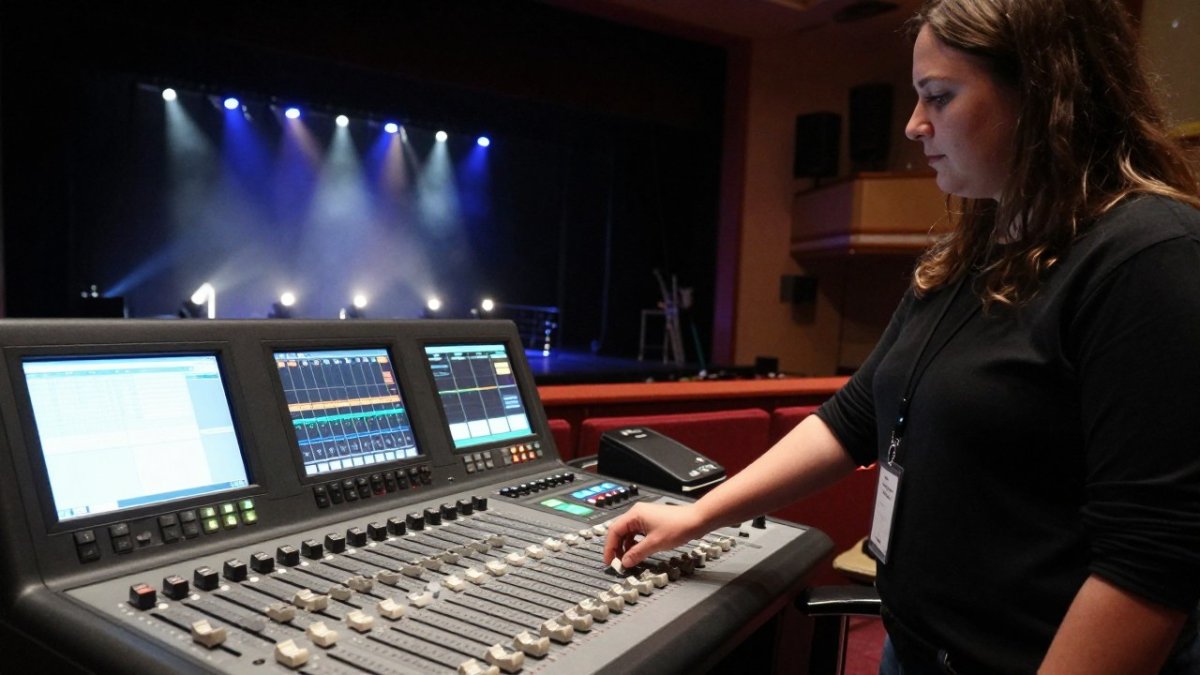
What the Job Actually Involves
A stage lighting technician handles the physical and technical work behind every cue. That means rigging fixtures, focusing beams, patching power, programming the console, and running the show live. When you tour a venue or plan a one-off date, our tour production and crew service covers concert sound, lighting, and staging.
Write the scope down: venue, show date, fixture count, console type, and who supplies power distribution. Everything downstream depends on it.
Writing a Lighting Technician Job Description That Attracts the Right Crew
A strong lighting technician job description names the venue, the show type, the equipment, and the exact duties, then states the schedule and pay range. If you want context on the kind of work the hire will face, our stage lighting guide for corporate events shows the range of setups a technician may walk into.
Structure the description around four blocks:
- Show details: venue, dates, load-in and load-out times, number of performances
- Technical scope: fixture types, console, power distribution, rigging points
- Duties: setup, focusing, programming, operation, testing, maintenance
- Requirements: years of experience, console proficiency, relevant certifications
Keep the pay line honest. Posting a day rate or hourly range up front saves everyone a screening call.
Stage Lighting Technician Qualifications: What to Verify Before You Book
The core qualifications for a stage lighting technician are hands-on console experience, rigging and focusing ability, electrical and power-distribution knowledge, and a track record on comparable productions. The hard part is not listing those qualifications, it is verifying them with evidence instead of conversation. Most hiring mistakes happen when a planner accepts a confident answer in place of a documented one.
Verify Experience by Production Type, Not by Years
Years of experience is the weakest signal on a resume. A technician with ten years in a 300-seat theatre may never have patched a 48-channel dimmer rack or worked a load-in with a union crew. Compare candidates against the production type you are actually running:
- Theatre and performing arts: look for cue-stack programming, follow-spot work, and rehearsal-to-performance transitions.
- Touring and concert: look for truck-to-stage load-ins, moving-light rigs, bus-and-truck schedules, and the ability to work fast under time pressure.
- Corporate and special events: look for quick turnarounds, ballroom rigging restrictions, and clean looks for camera and presentation lighting.
- Houses of worship: look for volunteer coordination, recurring weekly cues, and comfort training non-technical helpers.
Ask for a gear list from the last three shows and a reference from a venue similar to yours. A candidate who can name the console model, fixture count, and venue type from memory is describing real work. One who speaks only in generalities is not.
Safety Credentials and Compliance Checks
Lighting work involves electricity, working at height, and rigging loads overhead, so safety verification is not optional. Ask directly about the following and request documentation where it exists:
- Electrical safety: familiarity with lockout/tagout practices, proper grounding, and power distribution limits. Ask how they calculate load on a circuit before adding fixtures.
- Working at height: ladder and lift experience, fall-protection training, and whether they have operated a personnel lift or worked from truss.
- Rigging knowledge: understanding of weight ratings, rigging points, and when to stop and call a licensed rigger. A lighting technician should know the limits of their own rigging authority.
- Certifications: OSHA 10 or OSHA 30 cards, lift operator training, and any manufacturer console certifications are worth confirming. Ask to see the card, not just hear about it.
- Insurance: general liability coverage and whether the technician or their employer carries it. Venues often require a certificate of insurance before load-in.
Watch out: a technician who claims rigging expertise but cannot explain how they verify a weight rating is a liability on any show with overhead fixtures. Treat rigging claims as unverified until a reference confirms them.
The Verification Checklist
Run every candidate through the same sequence before booking:
- Confirm console models they have programmed, not just operated.
- Confirm rigging and focusing experience on your specific fixture types.
- Confirm comfort with power distribution and electrical load calculations.
- Confirm safety procedures followed on past shows, with a reference to back it up.
- Confirm insurance and credentials the venue requires.
If you need to confirm what lighting equipment is available before vetting crew, our PA, lighting, and wireless mic rentals page lists the inventory we stock. For houses of worship weighing an upgrade before hiring, our church production services and free system walkthrough can establish what the room actually needs first.
Run every candidate through the same verification sequence before booking.
| Check | What to confirm |
|---|---|
| Console experience | Models they have programmed, not just operated |
| Rigging and focusing | Experience on your specific fixture types |
| Power distribution | Comfort with electrical load calculations |
| Safety procedures | Past show procedures, backed by a reference |
| Insurance and credentials | Coverage and cards the venue requires |
Hiring Stage Lighting Technicians Near Me: Local Sourcing and Vetting
Local sourcing works best when you combine a regional search with a structured vetting process. Search terms like "hiring stage lighting technicians near me" surface plenty of names, but the vetting is what separates a reliable crew from a gamble.
How technical support pricing is structured matters here, so review our live event technical support pricing breakdown before you compare quotes. Local crew often charge travel and load-in separately, and that changes the real number.
Vet in this order:
- Confirm the technician has worked your venue type or a close equivalent.
- Request references from the last two productions.
- Ask for a walkthrough of how they would handle a mid-show failure.
- Verify insurance and safety credentials where the venue requires them.
Stage Lighting Technician Training: What to Expect on the Job
Training for a stage lighting technician rarely stops at hire. New crew learn your venue, your console, your fixture inventory, and your show-call rhythm during load-in and rehearsal. Most real skill comes from operating shows under supervision and building console fluency over time.
Plan for onboarding time in the production schedule. A first show with a new technician should include a rehearsal pass and a documented cue sheet.
Interview Questions and Skills Assessments That Reveal Real Ability
The best interview questions for stage lighting technicians force specifics, not opinions. Ask what console they programmed last, what failed during their last show, and how they fixed it. Strong candidates answer with model names, cue numbers, and timelines. Weak candidates answer with adjectives.
Questions That Separate Experience From Talk
Use a fixed question set for every candidate so you can compare answers side by side:
- "Walk me through your last load-in, from truck to first cue. What time did you start, and what slowed you down?"
- "Which consoles have you programmed, and on what size rig? Name the fixture count and channel count."
- "A moving light loses its position mid-show. What do you check first, and in what order?"
- "Describe a time you repaired a fixture at the venue instead of swapping it. What was the fault?"
- "How do you calculate whether a circuit can carry another fixture?"
- "Tell me about a show where the rig changed at the last minute. How did you adapt the cue stack?"
Listen for sequence and specificity. A strong answer to the moving-light question names the steps, check the fixture's DMX address, check the data chain, check the power, then swap the unit, rather than saying "I'd troubleshoot it." A strong answer to the circuit question shows the math, not a guess.
A Practical Assessment You Can Run in an Hour
Pair the interview with a short, safe practical test. Set up a small rig in advance and give the candidate a written task:
- Patch and address three fixtures to a console and confirm they respond.
- Focus two fixtures to marked positions on stage.
- Program a basic cue stack of five cues with fade times.
- Troubleshoot one deliberately introduced fault, a loose data cable, a wrong DMX address, or a tripped breaker, and talk through the diagnosis.
- Hand off by writing a short cue sheet another operator could follow.
Score each task on completion, method, and communication. The hand-off step matters as much as the technical work: a technician who cannot document a cue stack leaves the next operator guessing.
Watch out: never ask a candidate to work at height, energize unfamiliar power distribution, or rig overhead loads during an assessment. Keep the test on the ground, on a safe low-voltage rig, and observe rather than delegate safety decisions to the applicant.
Reference and Onboarding Checks
Before an offer, call the two most recent references and ask three questions: did the technician show up on time, did they leave the rig in working order, and would you book them again. Then plan onboarding. New crew need a venue orientation, a copy of the technical rider, a call sheet with load-in and load-out times, and a named point of contact for the show.
Book Your Lighting Crew and Lock the Show Plan
The gap between a smooth show and a stressful one usually comes down to scope, vetting, and a crew that has done the work before.
Ready to lock your date? Get a free quote and tell us about your event. We will scope the lighting, confirm the crew, and build the show plan with you.
Hiring the right lighting crew should not feel like a gamble on show night.
Frequently Asked Questions
How much do concert lighting techs make?
Pay varies by market and role. Rates rise with console programming, rigging, and touring experience. For a local event, ask for an all-in quote covering labor, equipment, and any travel, then compare the scope line by line rather than the hourly rate alone.
What qualifications should a stage lighting technician have?
Look for hands-on experience with lighting consoles, LED fixtures, and moving lights, plus a working knowledge of power distribution and rigging safety. Berklee describes the role as setup, rigging, programming, monitoring, repairing, and operating equipment, so ask for examples in each area. Verify references from venues similar to yours, confirm the technician can read a plot and a patch sheet, and check that they carry the insurance and safety training your venue requires before they arrive on site.
How many lighting technicians does an event need?
A small corporate event or banquet often runs with one technician on a console and one stagehand for setup and focus. A concert or theatre production with moving lights, multiple trusses, and a programmed show usually needs a lead programmer, a board operator, and two or more crew for rigging and changeovers. Give your provider the venue, the fixture list, and the show schedule, and ask them to size the crew in writing so you can compare quotes on equal terms.
What information should I provide when requesting a lighting quote?
Send the event date, load-in and show times, venue name and address, ceiling height, and any rigging restrictions. Include the stage plot, a fixture wish list, and whether you need a programmer, an operator, or both. Note any power limits and whether the venue requires certificates of insurance. With those details, a provider can quote labor, equipment, and travel accurately and flag what needs a site walkthrough before the contract is signed.

Sound, lighting, staging and LED video. Free quote.
Frequently Asked Questions
How much do concert lighting techs make?
Pay varies by market and role. Rates rise with console programming, rigging, and touring experience. For a local event, ask for an all-in quote covering labor, equipment, and any travel, then compare the scope line by line rather than the hourly rate alone.
What qualifications should a stage lighting technician have?
Look for hands-on experience with lighting consoles, LED fixtures, and moving lights, plus a working knowledge of power distribution and rigging safety. Berklee describes the role as setup, rigging, programming, monitoring, repairing, and operating equipment, so ask for examples in each area. Verify references from venues similar to yours, confirm the technician can read a plot and a patch sheet, and check that they carry the insurance and safety training your venue requires before they arrive on site.
How many lighting technicians does an event need?
A small corporate event or banquet often runs with one technician on a console and one stagehand for setup and focus. A concert or theatre production with moving lights, multiple trusses, and a programmed show usually needs a lead programmer, a board operator, and two or more crew for rigging and changeovers. Give your provider the venue, the fixture list, and the show schedule, and ask them to size the crew in writing so you can compare quotes on equal terms.
What information should I provide when requesting a lighting quote?
Send the event date, load-in and show times, venue name and address, ceiling height, and any rigging restrictions. Include the stage plot, a fixture wish list, and whether you need a programmer, an operator, or both. Note any power limits and whether the venue requires certificates of insurance. With those details, a provider can quote labor, equipment, and travel accurately and flag what needs a site walkthrough before the contract is signed.