Best Stage Lighting for Corporate Events: 2026 Guide
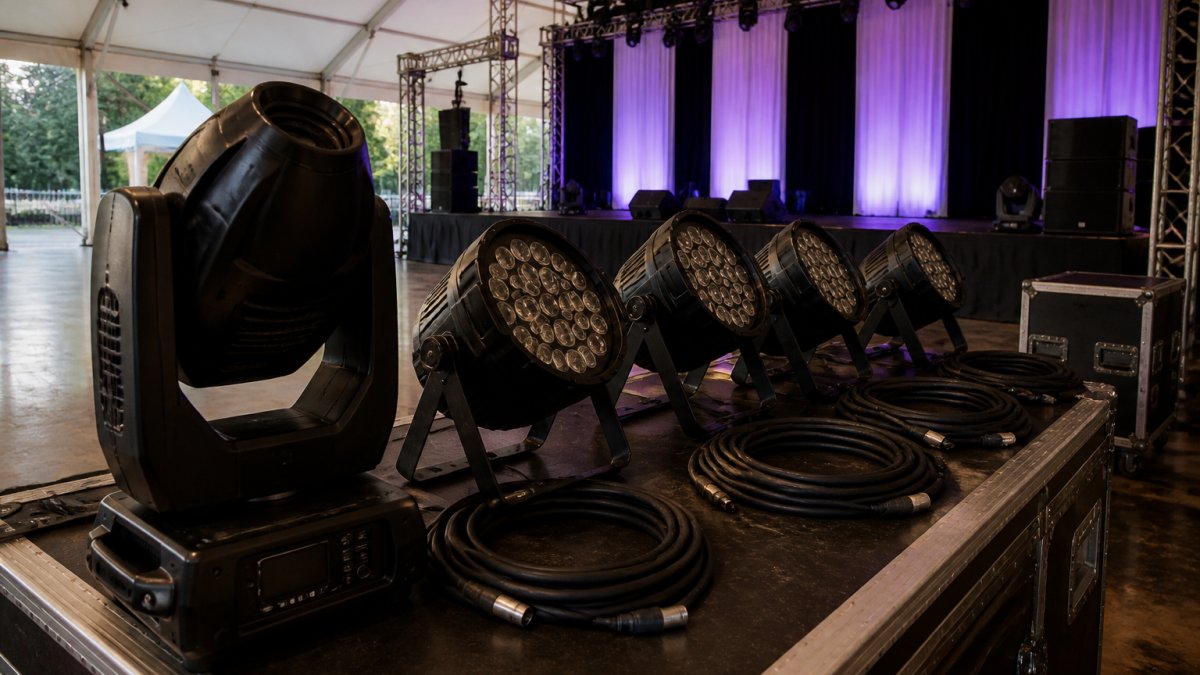
Table of Contents
- Best Stage Lighting for Corporate Events: How to Choose
- The Three-Layer Stage Lighting Setup That Works Every Time
- Stage Lighting for Conferences: Keynotes, Panels, and Hybrid Rooms
- LED Stage Wash Lights: Even Illumination and Shadow Control
- Event Uplighting: Color, Brand Identity, and Atmosphere
- Stage Lighting Equipment Rental: What to Ask Before You Book
- Power, Rigging, and Safety: The Details That Sink Events
- Conclusion
- Frequently Asked Questions
Last Updated: October 9, 2026
Best Stage Lighting for Corporate Events: How to Choose
The best stage lighting for corporate events keeps every speaker clearly visible, matches your brand colors, and survives a full day of sessions without a technician babysitting it.
At AudioBahn Productions, we build lighting for conferences, product launches, and keynote programs across the Great Lakes region. Below: the three-layer setup that works in almost any venue, how to match fixtures to room size, and what to ask before signing a stage lighting equipment rental agreement.
The 2026 planning cycle adds pressure most guides ignore. Hybrid sessions mean your stage has two audiences now: the people in the room and the camera. Event AV guidance from industry trade publications consistently flags camera-ready lighting as the top technical complaint from remote attendees.
Start With the Event Goal, Not the Gear
Opening a lighting plan with a fixture catalog is backwards. Start with three questions: What must the audience see clearly? What mood should the room carry? Will this be filmed or streamed?
A keynote demands even, bright front light on one speaker at a podium. A panel needs wider coverage across four or five people at a table. An awards dinner wants lower ambient levels with color and movement. Same room, three completely different rigs.
Writing the answers down before requesting quotes cuts back-and-forth and gives your production partner something concrete to price against.
The Three-Layer Stage Lighting Setup That Works Every Time
Build every corporate stage in three layers: front light for visibility, wash light for even coverage, and back or side light for depth. Skip a layer and the stage looks flat, muddy, or underlit on camera.
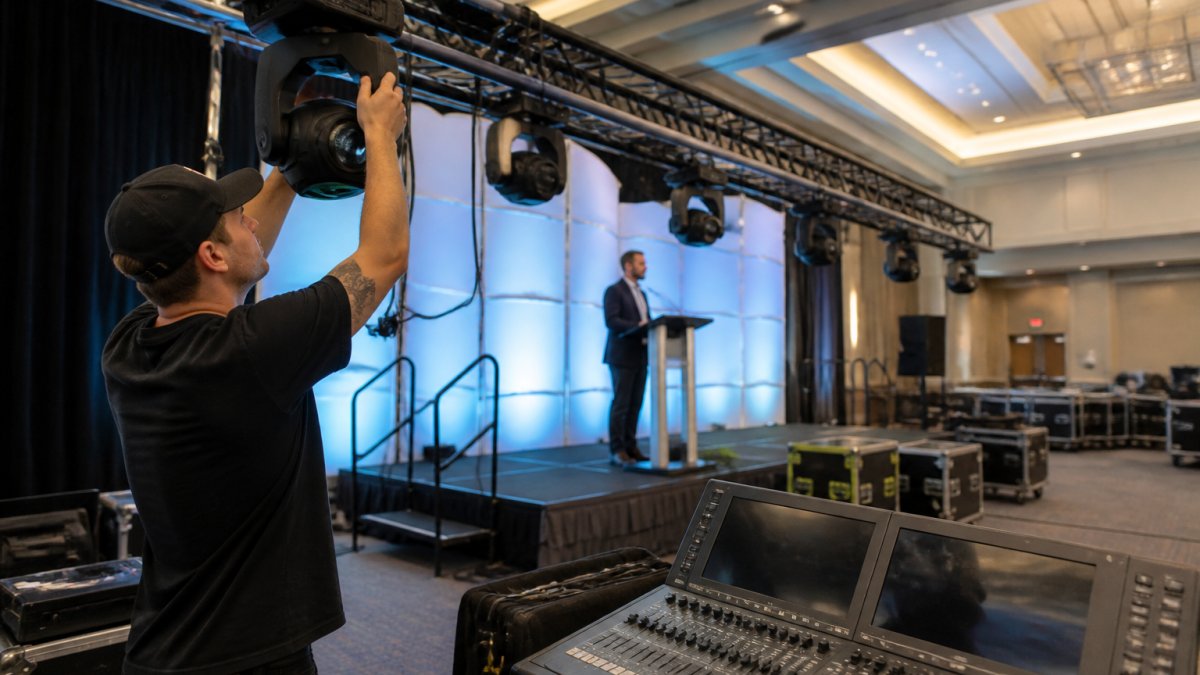
Front lighting is the non-negotiable layer. It hits the speaker from roughly 45 degrees above and 45 degrees to each side, filling in shadows under the eyes and nose. Two fixtures per presenter position is the standard starting point.
Wash lighting covers the rest of the stage so the speaker is not a bright island in a dark room. A broad, soft wash across the deck and backdrop keeps the whole frame readable.
Backlighting and side lighting separate the speaker from the background.
Wash Lights vs. Spotlights: What Each One Does
Wash lights are broad-beam fixtures that spread soft, even light across a wide area. Spotlights produce a tighter, more focused beam that can be shaped and aimed at a specific person or object.
Use wash lights for stage coverage, backdrop color, and audience areas. Use spotlights for keynotes, award presentations, and anywhere you need one person pulled out of the scene. A profile light, a type of spotlight with a hard-edged beam you can shape with gobos, works well for logo projection and patterned breakups on a backdrop.
Most corporate stages need a mix: 60 to 70 percent wash, 30 to 40 percent spot. The exact ratio depends on stage width and how many presenter positions you have.
| Fixture Type | Beam Character | Best For | Typical Placement |
|---|---|---|---|
| LED wash | Wide, soft, even | Stage coverage, color wash, backdrop | Truss above stage, floor uplight |
| Spotlight | Tight, focusable | Keynote speaker, award moment | Front truss, 45-degree angle |
| Profile light | Hard-edged, shapeable | Logo projection, patterned breakup | Front or side truss |
| Uplight | Narrow, upward throw | Walls, columns, room atmosphere | Floor, against vertical surfaces |
Stage Lighting for Conferences: Keynotes, Panels, and Hybrid Rooms
Stage lighting for conferences has one job above all others: every speaker must be equally visible, whether they are standing at a podium or seated at a panel table.
Keynote setups are simplest: one presenter, one position, two front fixtures plus a backlight, and a subtle brand-color wash on the backdrop.
Panels are harder. Five people at a table means five lit positions, and the person at the far end cannot be noticeably dimmer than the person in the middle.
Hybrid rooms add the camera requirement. Cameras compress dynamic range, so a stage that looks fine in person can show blown-out highlights on a speaker's forehead and crushed shadows on the backdrop.
LED Stage Wash Lights: Even Illumination and Shadow Control
The specification that matters most is beam angle. A narrow beam angle concentrates light into a tight pool, which is useful for uplighting a column but wrong for covering a 40-foot stage.
Throw distance matters just as much. A fixture mounted 20 feet from the stage covers a smaller area than the same fixture at 40 feet, but with less punch.
Color-changing LED fixtures also let you shift the entire look between sessions without swapping gel or refocusing, why most corporate rigs now run almost entirely on LED wash and spot fixtures.
Event Uplighting: Color, Brand Identity, and Atmosphere
Event uplighting is the fastest way to make a plain ballroom look intentional. Narrow-beam fixtures placed on the floor against walls, columns, and draping throw color upward and change the entire feel of a room.
For corporate events, color is a brand decision, not a decorative one.
Warm lighting in the 2700K to 3000K range feels inviting and works well for receptions and dinners. Neutral lighting around 4000K suits working sessions and exhibit halls.
Uplighting also carries the room through transitions: dim during a keynote, then bring them up in brand color as guests enter for the reception. That single cue does more for atmosphere than any amount of additional stage gear.
Stage Lighting Equipment Rental: What to Ask Before You Book
Stage lighting equipment rental comes down to fit, not fixture count. A package that matches your venue, power, camera setup, and load-in window will outperform a larger package that does not. These questions separate a smooth show from a mid-event scramble.
Fixture and Coverage Questions
- What is the beam angle and output of each fixture, and does it match my throw distance?
- How many separate lighting positions does my stage need, and how many fixtures per position?
- Are the fixtures flicker-free and color-consistent for camera and livestream use?
- What is the noise level of fixtures placed near presenter positions or microphones?
Control, Power, and Rigging Questions
- Does the package include control, cabling, and a technician, or is that billed separately?
- Can the rig run on the power available in my venue without a generator or distro upgrade?
- What is the total amperage draw of the rig, and how does it compare to the circuits the venue can dedicate?
- Are rated clamps, safety cables, and a truss or structure rated for the combined load included?
- Who handles cable management across walkways and audience areas?
Venue Coordination and Contingency Questions
- What is the load-in and load-out window, and does the rig fit it?
- Who handles a fixture failure mid-event, and how fast can they respond?
- Can you supply the rest of the event too, or will I be coordinating multiple vendors?
That last question matters more than most planners expect. Splitting sound, lighting, and staging across separate vendors is where coordination failures happen. A single production partner owns scheduling, payments, and contracts under one roof, one point of contact instead of three vendors pointing at each other when something slips.
A Practical Pre-Booking Checklist
Before you sign a rental agreement, confirm these items in writing:
- Power. Add up the amperage of every fixture on a circuit. Corporate venues often have less available power than a stage design assumes, especially in older ballrooms and hotel meeting spaces. Where power is tight, LED fixtures draw far less current than older technology for the same output.
- Rigging. Overhead fixtures need rated clamps, safety cables, and a truss or structure rated for the combined load. OSHA standards for overhead rigging and fall protection set the requirements that apply when anyone works at height to hang or focus fixtures.
- Control. A simple preset-based console lets an operator recall a keynote look, a panel look, and a reception look with one button. Program those cues during setup, not during the event.
- Cable management. Plan cable runs before load-in. Cables across walkways are a trip hazard and a common reason venues ask for changes on site.
- Camera requirements. Confirm the camera's white balance setting before the rig is finalized. Matching fixtures to the camera rather than guessing saves an hour of color correction in post.
- Venue coordination. Share your rig plan with the venue's AV or facilities contact early. Some venues require their own labor, restrict rigging points, or limit load-in hours.
Beyond Lighting: Full Event Support
Lighting rarely stands alone. The same production partner that hangs your truss can often handle the rest of the event footprint: audio, staging, and the logistical support that keeps a live event running, restroom trailers, tents, and other on-site needs. Consolidating under one team reduces contracts, schedules, and points of failure.
Power, Rigging, and Safety: The Details That Sink Events
Power, rigging, and safety planning separate a professional event from a risky one. Every fixture has a power draw, every truss has a weight limit, and every overhead position needs proper hardware and inspection.
Add up the amperage of every fixture on a circuit before you commit to a layout. Corporate venues often have less available power than a stage design assumes, especially in older ballrooms and hotel meeting spaces.
Rigging is where safety rules apply directly. Overhead fixtures need rated clamps, safety cables, and a truss or structure rated for the combined load. OSHA standards for overhead rigging and fall protection set the requirements that apply when anyone works at height to hang or focus fixtures.
Control matters too. A simple preset-based console lets an operator recall a keynote look, a panel look, and a reception look with one button. Program those cues during setup, not during the event.
Conclusion
The hardest part of corporate event lighting is not choosing fixtures. It is coordinating power, rigging, control, and camera requirements so nothing fails when the room is full. AudioBahn Productions manages that entire scope, concert sound, stage lighting, staging, and backline, with scheduling, payments, and contracts through one production partner. If your next event needs a rig built for the room, the camera, and your brand colors, we can plan and run it end to end.
Register with AudioBahn Productions and let one team own your next production.
Frequently Asked Questions
What lighting is best for a corporate presentation?
Warm white front lighting at 3200K to 4000K keeps speakers looking natural and visible, while a separate color wash on the backdrop adds depth without washing out faces. Keep the stage wash even across the whole platform so nobody walks into a dark patch. For camera or livestream feeds, avoid mixing color temperatures on stage, since mismatched white light reads as a color cast on video.
How do you light a stage for a conference with a tight budget?
Prioritize front lighting and an even stage wash first, since speaker visibility matters more than decorative color. Add event uplighting along walls and backdrops for atmosphere, and rent LED stage wash lights rather than buying if you only run a few events a year. Stage lighting equipment rental lets you scale fixture count to the room instead of overbuying.
How many lights do you need for a corporate event stage?
A rough starting point is one front light per 4 to 6 feet of stage width, plus a wash fixture every 6 to 8 feet for the backdrop. Room size, ceiling height, and throw distance change those numbers, so a wide ballroom with a low ceiling needs more fixtures at shorter distances than a tall theater stage. Ask your provider to calculate coverage for your specific venue.
Why does stage lighting matter for hybrid and livestreamed events?
Cameras handle contrast differently than the human eye. A stage that looks dramatic in person can blow out faces or leave speakers in shadow on a livestream. Even front lighting, consistent color temperature, and controlled backlighting keep presenters sharp on camera. If your event streams, tell your lighting provider before the design is finalized so fixtures and positions match the camera angles.
Sound, lighting, staging and LED video. Free quote.
Frequently Asked Questions
What lighting is best for a corporate presentation?
Warm white front lighting at 3200K to 4000K keeps speakers looking natural and visible, while a separate color wash on the backdrop adds depth without washing out faces. Keep the stage wash even across the whole platform so nobody walks into a dark patch. For camera or livestream feeds, avoid mixing color temperatures on stage, since mismatched white light reads as a color cast on video.
How do you light a stage for a conference with a tight budget?
Prioritize front lighting and an even stage wash first, since speaker visibility matters more than decorative color. Add event uplighting along walls and backdrops for atmosphere, and rent LED stage wash lights rather than buying if you only run a few events a year. Stage lighting equipment rental lets you scale fixture count to the room instead of overbuying.
How many lights do you need for a corporate event stage?
A rough starting point is one front light per 4 to 6 feet of stage width, plus a wash fixture every 6 to 8 feet for the backdrop. Room size, ceiling height, and throw distance change those numbers, so a wide ballroom with a low ceiling needs more fixtures at shorter distances than a tall theater stage. Ask your provider to calculate coverage for your specific venue.
Why does stage lighting matter for hybrid and livestreamed events?
Cameras handle contrast differently than the human eye. A stage that looks dramatic in person can blow out faces or leave speakers in shadow on a livestream. Even front lighting, consistent color temperature, and controlled backlighting keep presenters sharp on camera. If your event streams, tell your lighting provider before the design is finalized so fixtures and positions match the camera angles.