Event Production for Midwest University Graduations in 2026
Last Updated: November 19, 2026
Quick Summary
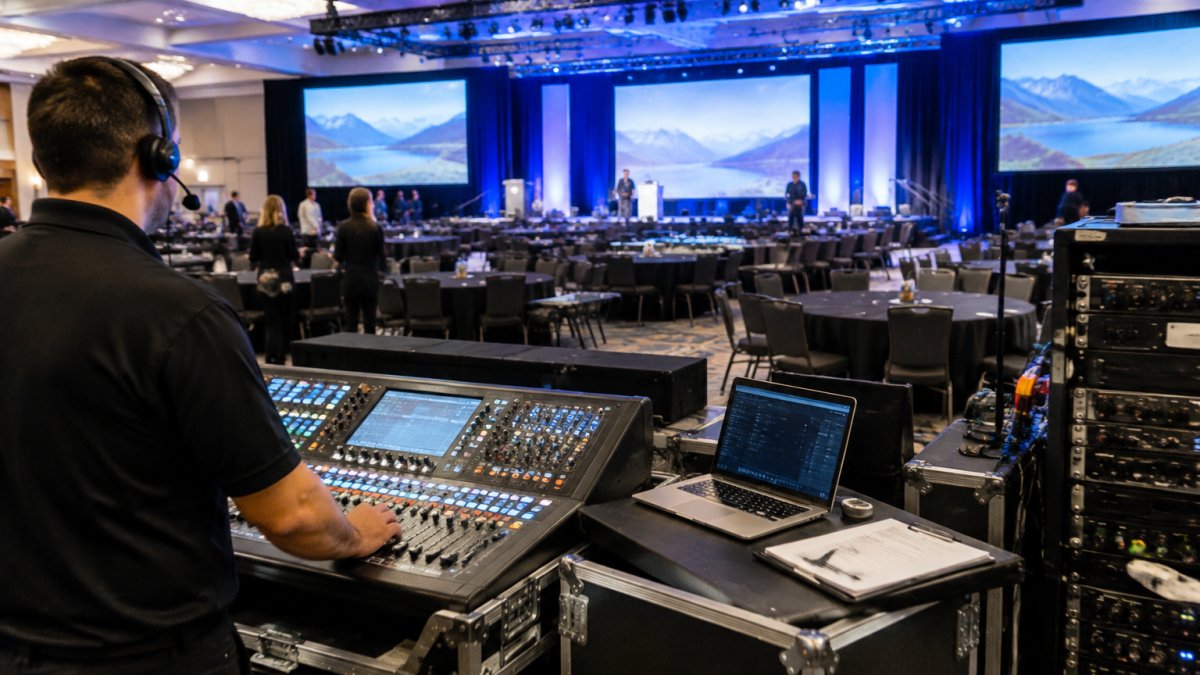
Event production for midwest university graduations combines concert-grade audio, staging, lighting and video with full logistical support, all run on one production timeline and one crew. We plan commencement backward from the ceremony start time, so university graduations stay on schedule for parking, photography, receptions and the live stream.
- Build the commencement checklist backward from the ceremony start time, not forward from the planning meeting.
- Treat audio as three systems: house, stage monitoring and broadcast feed, each with its own failure plan.
- Outdoor ceremonies need delay towers, generator power and named weather triggers with clear authority to call delays.
- Confirm rigging capacity and load-in windows in writing for indoor arena and fieldhouse ceremonies.
- We offer a free walkthrough and evaluation and recommend only needed upgrades.
Table of Contents
- Why Midwest University Graduations Demand Full-Scale Event Production
- Technical Production vs. Full-Scale Logistical Support
- Your Commencement Ceremony Production Checklist
- University Commencement AV Requirements Most Schools Overlook
- Outdoor vs. Indoor Venue Production: What Changes
- Hiring Professional Event Production for Schools: What to Ask
- Budgeting and Accessibility: Two Frameworks Planners Skip
- Book a Free Walkthrough Before Your Next Commencement
- Frequently Asked Questions
Why Midwest University Graduations Demand Full-Scale Event Production
A spring commencement at a Midwestern university is not a lecture hall event with a podium. It is a live broadcast, a family reunion, a photo opportunity, and a logistics operation running on a fixed clock. Event production for midwest university graduations has to hold all four together at once.
At AudioBahn Productions, we plan commencement the way we plan a concert: one production timeline, one crew, one point of accountability. The reason is simple. A ceremony schedule that slips by ten minutes ripples through parking, photography, receptions, and the live stream that grandparents in another state are watching.
Below, we break down what full-scale production actually covers, the AV requirements schools overlook, and the questions to ask before you sign a contract.
Technical Production vs. Full-Scale Logistical Support
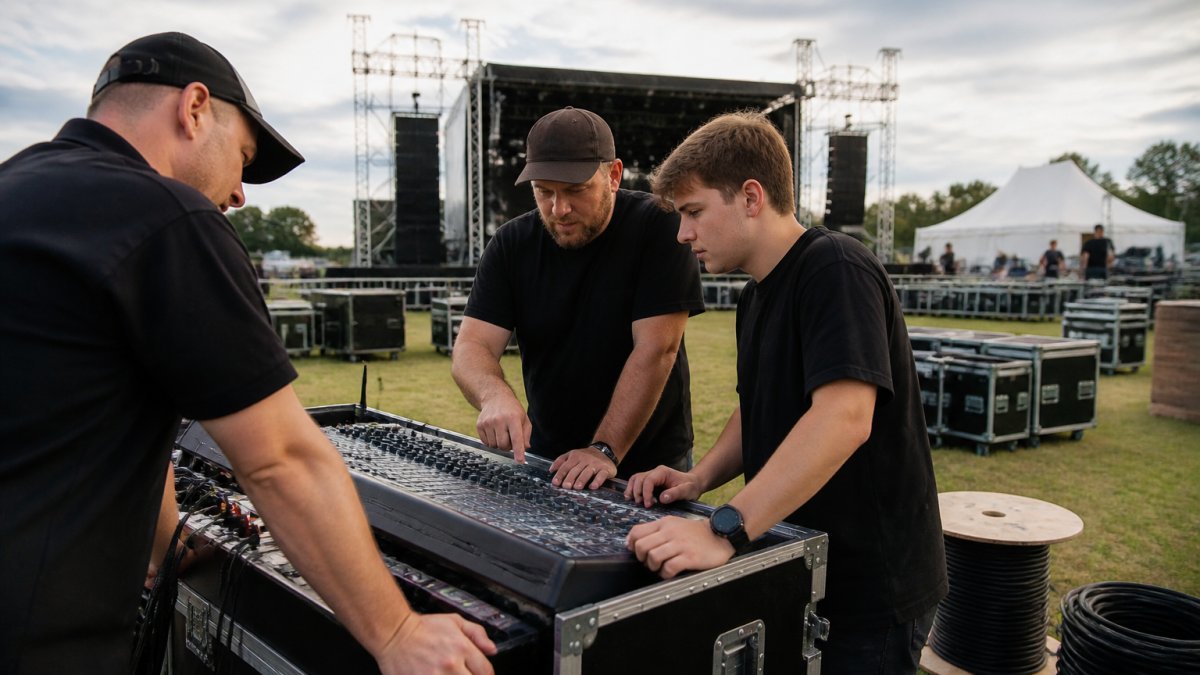
Technical production is the gear and the people who run it: concert sound, stage lighting, staging, video projection, and the crew that keeps signal flowing. Full-scale logistical support is everything around it, including event infrastructure such as restrooms, tents, and temporary site needs.
Most schools buy the first and improvise the second. That is where commencement day goes sideways.
A production partner that manages scheduling, payments, and contract administration can reduce coordination gaps between your facilities team, your AV vendor, and the caterer. You can see the full scope on our school graduation event service page and request it for your ceremony. One schedule. One invoice trail. One call when something changes.
For a closer look at how that scope maps to an academic ceremony, see our breakdown of what university event production management involves.
Your Commencement Ceremony Production Checklist
A commencement ceremony production checklist works backward from the ceremony start time, not forward from the planning meeting. Here is the sequence we use, with the concrete items that separate a smooth ceremony from a memorable one.
| Phase | Focus | Owner |
|---|---|---|
| Twelve months out | Venue hold, budget, production scope, accessibility plan | Administration |
| Six months out | Vendor contracts, power and rigging survey, weather contingency | Production partner |
| Ninety days out | Run of show, speaker needs, stream plan, captioning vendor | Production + communications |
| Week of ceremony | Load-in, rehearsal, redundancy check, backup power test | Production crew |
| Day of ceremony | Cue calling, backup systems, strike | Production crew |
Twelve Months Out
Lock the venue and the ceremony format first. Outdoor versus indoor changes the entire equipment list, and the academic calendar rarely moves for you. Confirm whether the event is ticketed, whether it streams, and how many graduates cross the stage.
Six Months Out
This is where crisis management gets planned, not improvised. For an outdoor ceremony, decide now what the weather trigger is, a lightning radius, a wind threshold, a heat index, and who has the authority to call a delay or a move indoors. Confirm whether the venue has a backup indoor space and how fast it can be reset. Confirm generator capacity and whether the venue's power can carry the full production load plus a backup.
Ninety Days Out
Build the run of show and confirm every speaker's audio needs. Verify power access, rigging points, and load-in routes with the venue. Confirm the live stream platform and who owns the stream if the network drops. Confirm the captioning vendor and whether captions are live or post-event. Lock the cue caller and make sure that person has walked the venue.
Week of Ceremony
Load in, test every input, and rehearse the procession with the actual cue caller. Walk the backup plan out loud with your team: what happens on a power failure, a microphone failure, a network drop, and a weather delay. Test the backup power under load, not just at the panel. Then strike cleanly so the venue can reset.
University Commencement AV Requirements Most Schools Overlook
The most common oversight is treating the audio system as one system. It is three: the house system for the audience, the stage monitoring for speakers and performers, and the broadcast feed for the live stream. Each needs its own mix and its own failure plan.
The second oversight is intelligibility. A large hall or an open lawn swallows speech differently than music, and a system tuned for a choir will make a commencement address sound muddy. Speech-first tuning matters more than output power.
The third is redundancy. A wireless microphone battery failure during the valedictorian's address is not a technical hiccup, it is the moment everyone remembers.
- Dedicated speech microphones with fresh batteries and a spare on standby
- Stage monitoring separate from the house mix
- Broadcast audio split from the front-of-house feed
- Captioning and assistive listening planned before the event, not after
Outdoor vs. Indoor Venue Production: What Changes
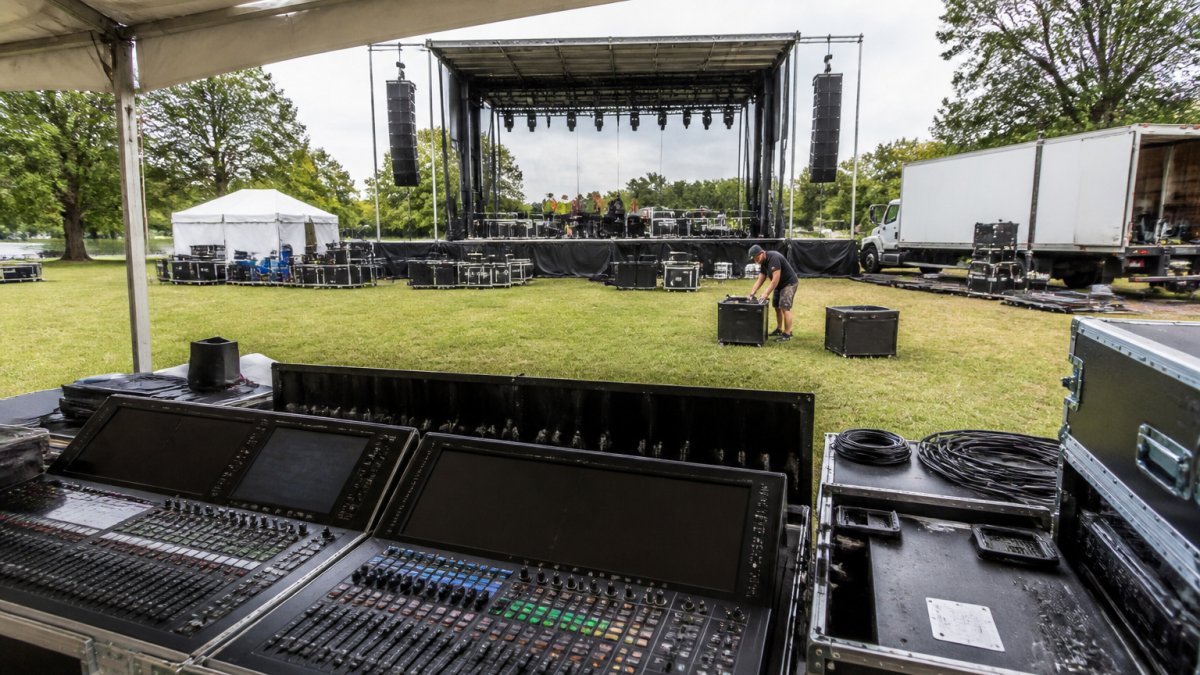
Outdoor production trades control for space. You gain seating capacity and lose the walls that contain sound, so outdoor audio systems need delay towers, careful aiming, and a plan for wind and weather. Indoor production trades space for control, but brings rigging limits, power constraints, and load-in windows.
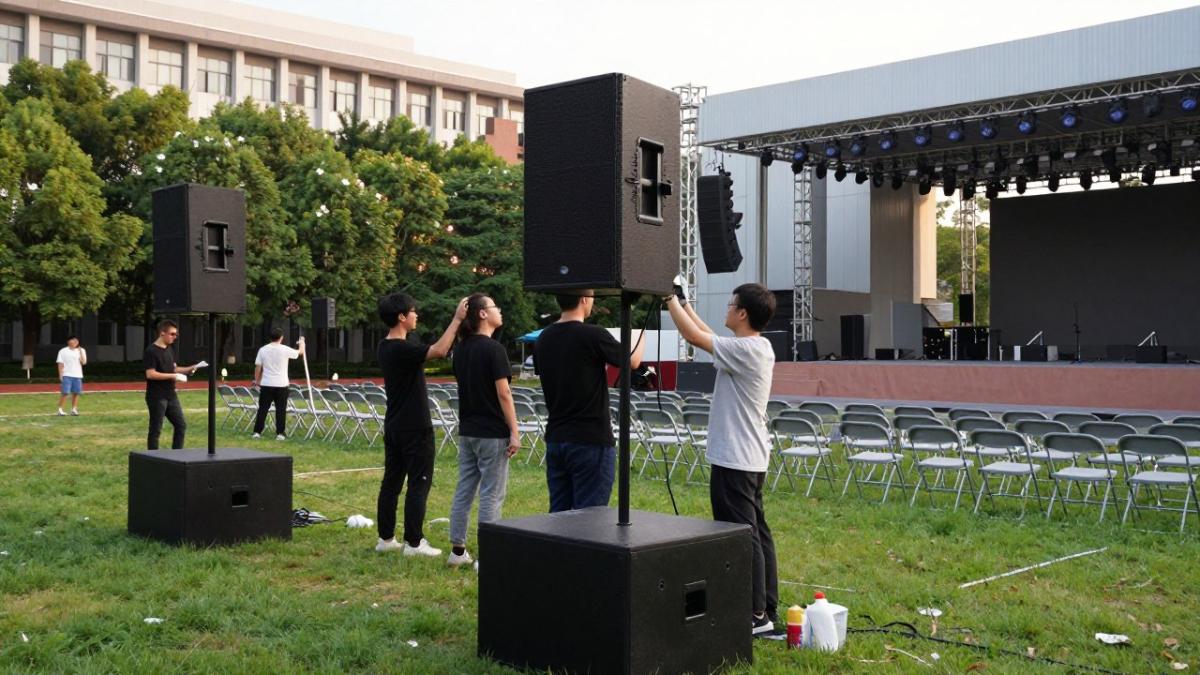
The practical difference shows up in the production timeline. Outdoor load-in usually starts earlier and depends on weather. Indoor load-in depends on the venue's other bookings. Neither is harder, but they fail in different ways.
What Outdoor Ceremonies Actually Require
An outdoor commencement on a lawn or quad is a sound-coverage problem before it is anything else. Speech intelligibility drops with distance and wind, so a single line array at the stage will not carry to the back rows. Delay towers placed at roughly the midpoint of the seating area, aimed back toward the stage, can help restore intelligibility in the rear sections. Wind is the enemy of both sound and staging: banner frames, backdrops, and lighting truss all need wind ratings and ballast, and the production plan should state the wind speed at which you stop raising truss.
Power is the second outdoor reality. A lawn usually has no usable house power, so the production runs on generators sized for the full load plus headroom. Confirm generator placement, fuel access, and cable runs that do not become trip hazards. For weather, the plan should name a lightning radius, a wind threshold, and a heat index trigger, plus the person with authority to call a delay.
Accessibility outdoors is a design decision, not an afterthought. Accessible seating needs a stable surface, sightlines over standing crowds, and a route to the stage that does not cross grass or gravel. Assistive listening and captioning still apply outdoors, and captioning displays need shade and weather protection.
What Indoor Ceremonies Actually Require
An indoor ceremony in an arena or fieldhouse gives you walls, house power, and rigging points, but it also gives you rigging limits, load-in windows, and a house system that may not be tuned for speech. Confirm the rigging capacity and the load-in window in writing, and confirm whether the house audio can be split for a broadcast feed. Indoor ceremonies also inherit the venue's fire code and crowd management rules, which shape seating, aisles, and stage access.
If you want to see how those setups have played out on past events, our project portfolio covers concert, festival, and AV installation work.
Hiring Professional Event Production for Schools: What to Ask
Hiring professional event production for schools comes down to five questions, and the answers separate a vendor from a partner.
Ask who owns the schedule when three vendors disagree. Ask what happens when a piece of equipment fails mid-ceremony and how fast a replacement arrives. Ask whether the crew has worked your venue before. Ask how the contract handles change orders.
A common mistake is choosing on equipment list alone. Two companies can list the same speaker cabinets and deliver wildly different ceremonies, because the difference is crew discipline and cue calling.
For a full question set to bring into the interview, use our guide on what to ask event production companies.
Budgeting and Accessibility: Two Frameworks Planners Skip
Budgeting for an academic ceremony works best as three buckets: fixed production costs, variable headcount costs, and contingency. Fixed costs cover staging, lighting, and sound. Variable costs scale with graduates, guests, and stream viewers. Contingency covers weather, extra power, and last-minute additions.
Accessibility is the framework planners skip until a complaint arrives.
Book a Free Walkthrough Before Your Next Commencement
The cheapest production decision you can make is the one made before load-in. We offer a free walkthrough and evaluation of your system, and we recommend only needed upgrades.
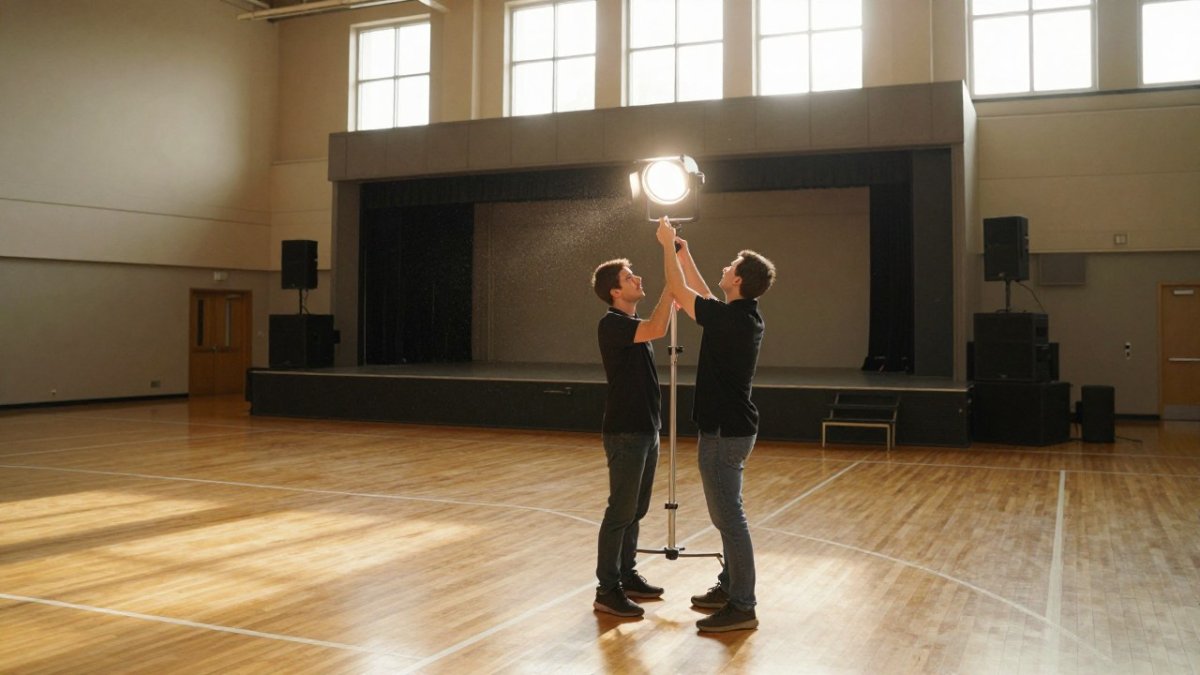
We also train volunteer tech crews, which matters for schools running assemblies and ceremonies on a limited staff. Tell us about your event and request a custom production quote.
Your next commencement will arrive on a fixed date whether the production plan is ready or not. AudioBahn Productions manages live event production scheduling, payments, and contracts, and supplies concert sound, stage lighting, staging, and backline across the Great Lakes region. Start with a free walkthrough and evaluation, and build the plan before the rehearsal.
Frequently Asked Questions
What are the essential AV requirements for a university commencement ceremony?
At minimum you need a speech reinforcement system sized for the full seating area, wireless lavaliers and handheld mics for speakers and the announcer, a redundancy plan for the primary mixer, large-screen projection or LED for name reading, and recorded music playback with a backup source. Outdoor ceremonies add wind protection for mics and delay speakers so the back rows hear clearly. Confirm power capacity and generator backup before signing any venue contract.
How far in advance should a university begin planning graduation production?
Start twelve months out for large ceremonies. Venue holds, stage and tent rentals, and graduation-week crew availability all tighten up early. Ninety days out is the practical deadline for locking audio, lighting, and projection specs, and two weeks out you should have a final run-of-show with cue sheets. Schools that wait until spring semester often pay more for less equipment choice.
What safety and accessibility standards must be met for outdoor graduation stages?
Outdoor stages must comply with ADA accessibility requirements for seating, ramps, and stage access, and staging should be installed to manufacturer and local fire marshal specifications. Plan for weather contingencies: secured truss and ballast, a lightning evacuation protocol, and clear communication channels with campus safety. Ask any production vendor for their certificate of insurance and their written severe-weather plan before the event.
What are the benefits of hiring a full-service production company for university events?
A single production partner coordinates audio, lighting, staging, projection, and power under one contract, which removes the gaps that appear when separate vendors hand off responsibilities. You get one point of contact for scheduling, payments, and on-site troubleshooting, plus crew who have worked the same venue before. For commencement, that continuity matters most in the final 48 hours when setup, rehearsal, and ceremony run back to back.

Sound, lighting, staging and LED video. Free quote.
Frequently Asked Questions
What are the essential AV requirements for a university commencement ceremony?
At minimum you need a speech reinforcement system sized for the full seating area, wireless lavaliers and handheld mics for speakers and the announcer, a redundancy plan for the primary mixer, large-screen projection or LED for name reading, and recorded music playback with a backup source. Outdoor ceremonies add wind protection for mics and delay speakers so the back rows hear clearly. Confirm power capacity and generator backup before signing any venue contract.
How far in advance should a university begin planning graduation production?
Start twelve months out for large ceremonies. Venue holds, stage and tent rentals, and graduation-week crew availability all tighten up early. Ninety days out is the practical deadline for locking audio, lighting, and projection specs, and two weeks out you should have a final run-of-show with cue sheets. Schools that wait until spring semester often pay more for less equipment choice.
What safety and accessibility standards must be met for outdoor graduation stages?
Outdoor stages must comply with ADA accessibility requirements for seating, ramps, and stage access, and staging should be installed to manufacturer and local fire marshal specifications. Plan for weather contingencies: secured truss and ballast, a lightning evacuation protocol, and clear communication channels with campus safety. Ask any production vendor for their certificate of insurance and their written severe-weather plan before the event.
What are the benefits of hiring a full-service production company for university events?
A single production partner coordinates audio, lighting, staging, projection, and power under one contract, which removes the gaps that appear when separate vendors hand off responsibilities. You get one point of contact for scheduling, payments, and on-site troubleshooting, plus crew who have worked the same venue before. For commencement, that continuity matters most in the final 48 hours when setup, rehearsal, and ceremony run back to back.