Production Services for Small Corporate Events: 2026 Guide
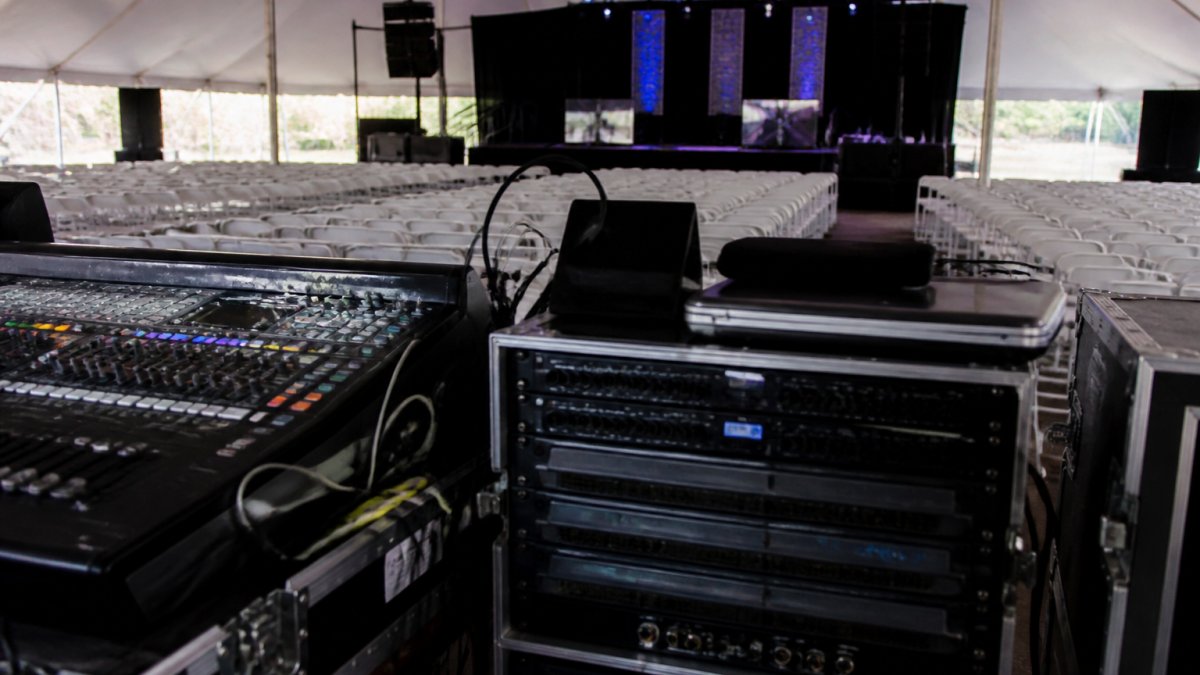
Table of Contents
- Why Small Corporate Events Need Production Services
- Corporate Event AV Services: What a Small Event Actually Needs
- Corporate Team-Building Activities That Work With Your Production Setup
- Contingency Planning: When Equipment Fails Mid-Event
- Frequently Asked Questions
Last Updated: October 14, 2026
Why Small Corporate Events Need Production Services
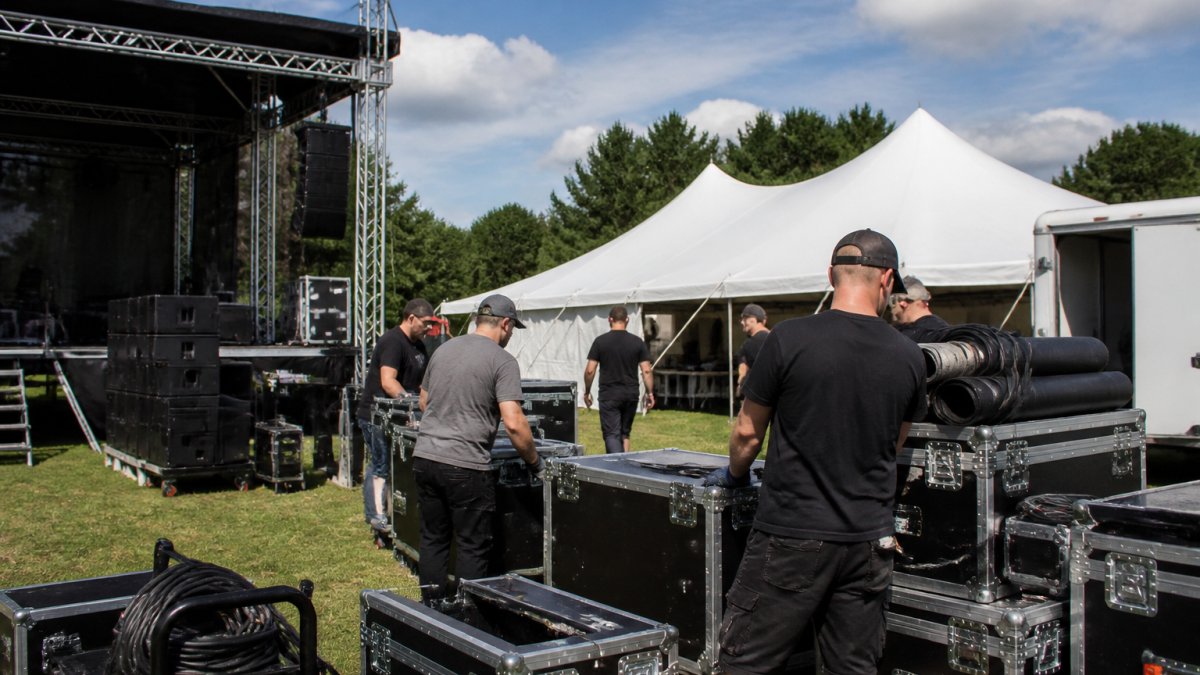
Production services for small corporate events cover the technical and logistical work that keeps a 50-person sales meeting or product launch running: sound, lighting, video, staging, and the crew that operates it all.
Small events carry the same technical risk as large ones: a board meeting where the CEO's microphone cuts out is as damaging as a stadium show with a dead monitor.
Corporate Event AV Services: What a Small Event Actually Needs
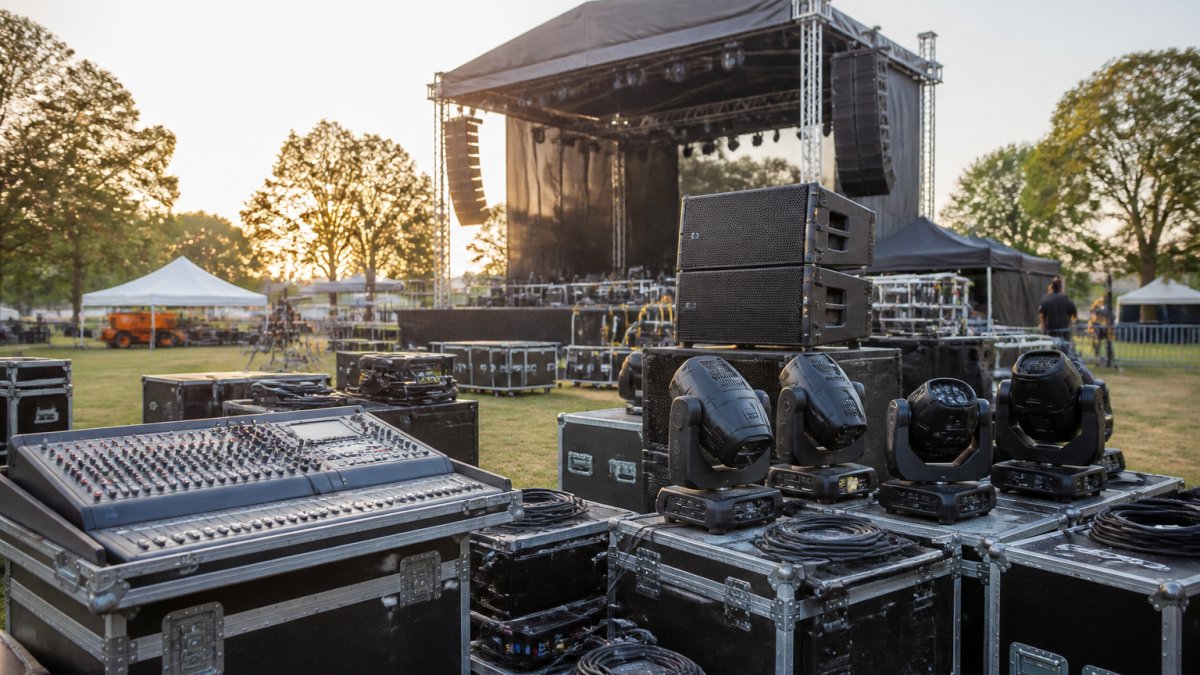
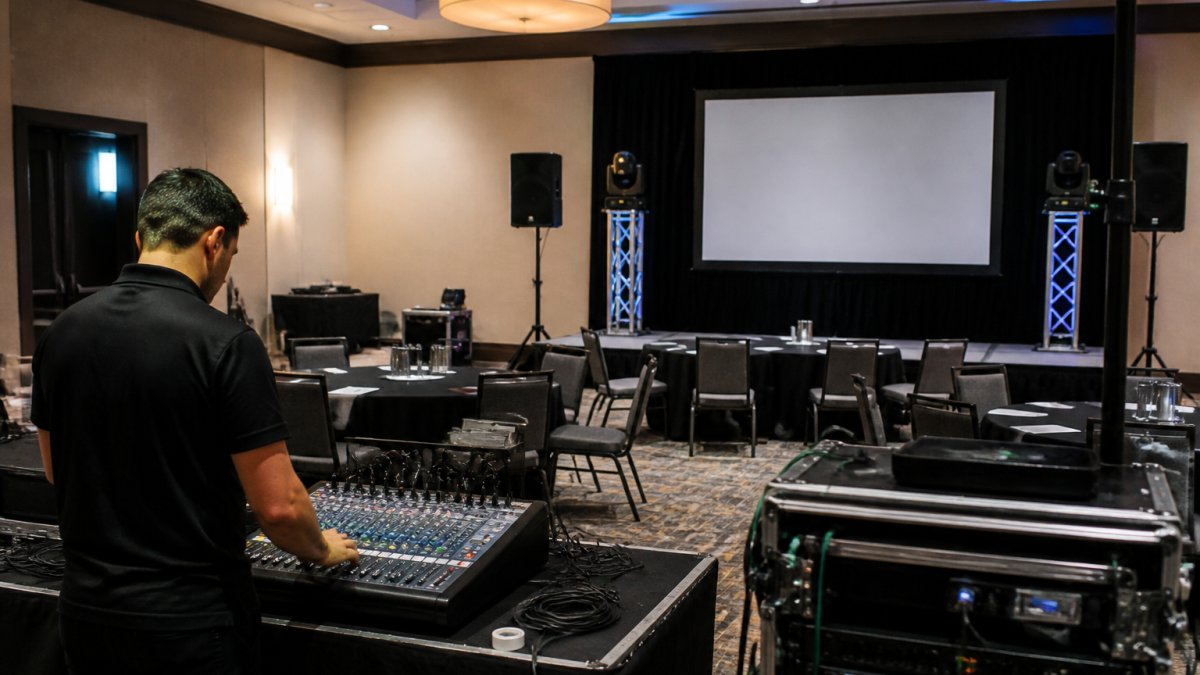
Corporate event AV services for a small event come down to three systems working together: a sound system sized to the room, lighting that makes people and content visible, and video that lets remote attendees follow along.
What Actually Drives the Number
Four variables move a small-event quote more than anything else:
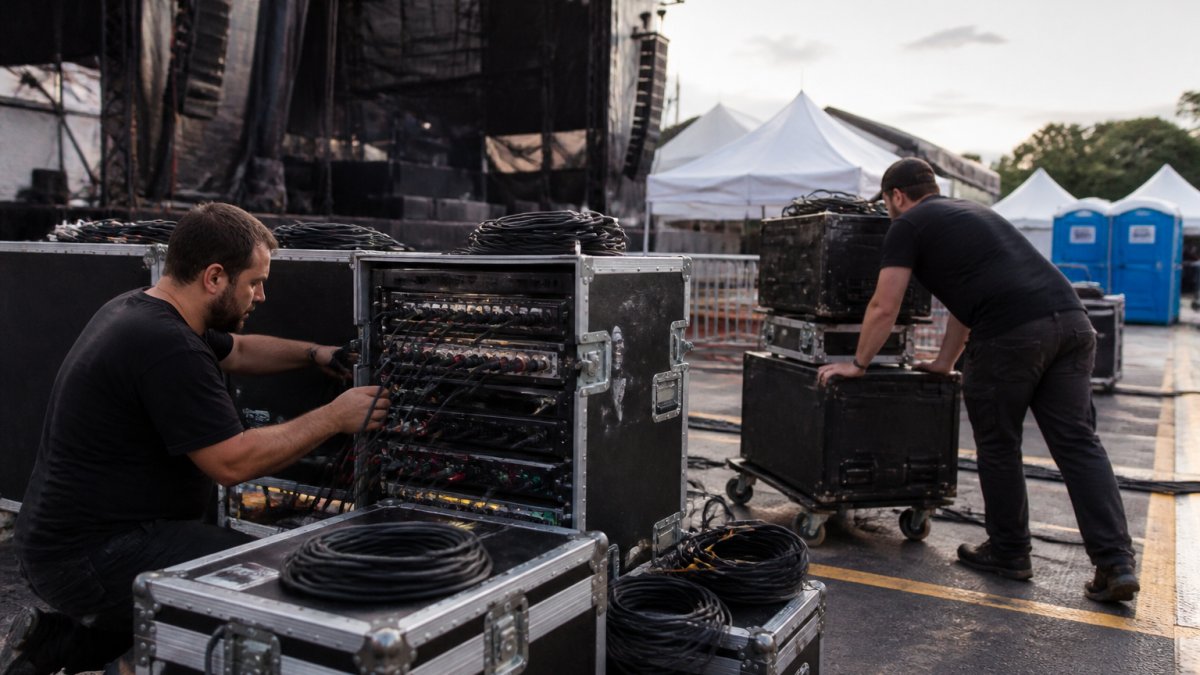
- Crew count and hours. One technician can run a simple sound-and-slides program. Add live streaming, a second camera, or simultaneous breakout rooms and you need a second operator, and labor is usually the largest line on the invoice. Ask whether the quote covers setup, show, and strike hours separately or as one block.
- Equipment tier and redundancy. A single wireless handheld versus a four-channel system with spare capsules and a backup receiver is a different risk profile, not just a different price. Redundancy costs money up front and saves the program when a channel fails.
- Venue friction. Load-in distance, freight elevator access, union labor requirements, and available power all change how long setup takes. A room with a loading dock and a dedicated circuit is cheaper to produce than a ballroom where every case comes up a service elevator.
How to Compare Proposals Without Getting Fooled
Ask every vendor for an itemized quote that separates equipment, labor, delivery, setup, and strike. That structure lets you cut line items instead of the whole package and makes two proposals comparable side by side.
| Factor | What to Ask | Why It Matters |
|---|---|---|
| Equipment list | Written spec sheet with model numbers and quantities | Prevents mismatched gear on event day |
| Labor breakdown | Crew size, roles, and hours for setup, show, and strike | One person cannot run sound and video at once |
| Setup window | Hours needed before doors open | Tight windows force rushed setups |
| On-site support | Coverage through the full program, not just setup | Breakdowns happen mid-program, not before |
| Backup plan | Spare mics, cables, power, and a backup playback device | A single failed cable can stall the program |
| Service area | Travel radius and how travel time is billed | Out-of-area events may add cost and delay |
| Change process | How scope changes are priced after signing | Protects you from surprise add-ons |
Questions That Separate a Real Vendor From a Risky One
- Who is the named on-site lead, and will that person be the one running my show?
- What happens if a channel drops during the keynote, what is the recovery step, and who executes it?
- Have you produced in this specific room before, and what surprised you last time?
A vendor who answers these in specifics is usually the safer choice even if the quote is not the lowest. A vendor who deflects is telling you something.
Build Versus Buy: The Honest Trade-Off
If you are weighing a piece-by-piece rental against a managed package, the trade-off is control versus risk. Renting equipment yourself can look cheaper on paper, but you own the setup, the troubleshooting, and the liability if a speaker fails mid-presentation. For a smaller event, a single vendor managing sound, lighting, and staging usually costs less than coordinating three separate rentals, and it removes the finger-pointing when something fails.
A Simple Decision Rule
If the event has one speaker, one room, and no recording, a lean package with one technician is usually enough. If it has multiple speakers, breakout rooms, remote attendees, or a recording you plan to reuse, step up to a managed package with redundancy and a named on-site lead. The difference is almost always smaller than the cost of a failed program.
Corporate Team-Building Activities That Work With Your Production Setup
Corporate team-building activities work best when they use the production setup you already have rather than requiring a second vendor. If you have booked sound and lighting for a morning meeting, you can extend that investment into the afternoon instead of paying for a separate entertainment package.
Portable laser tag is one example that fits this pattern well. It needs open floor space, some ambient lighting control, and a sound system for announcements and music, all of which a corporate event production setup already provides.
Contingency Planning: When Equipment Fails Mid-Event
Contingency planning means deciding in advance what happens when a microphone dies, a projector lamp burns out, or a laptop refuses to connect. Equipment failure is not a question of if but when, and the difference between a hiccup and a disaster is whether anyone planned for it.
Build these into every event:
- Spare microphones and cables on site, tested and ready
- A backup playback device with the presentation loaded locally
- A named on-site contact from your production vendor, with a phone number
Small corporate events still carry real production risk, and the teams that plan for it are the ones whose programs run without a hitch. AudioBahn Productions provides concert sound, stage lighting, staging, backline, and equipment rentals across the Michiana region and the Great Lakes area, with scheduling, payments, and contract administration handled under one agreement.
Frequently Asked Questions
What production services do small corporate events need?
Most small corporate events need four core elements: a sound system for speeches and presentations, lighting that makes the stage and room look intentional, video support for slides or live streaming, and a technician who can manage it all on-site. For a 50-person meeting, that might mean two wireless microphones, a compact PA, a few LED uplights, and a projector. For a 200-person product launch, you would add staging, multi-camera coverage, and a production crew. The right scope depends on your venue, audience size, and how much of the experience you want to control.
How do I choose an event production company for a corporate event?
Start by asking three questions: Can they handle sound, lighting, video, and logistics under one contract? Do they have experience with events your size, not just large concerts? And what is their on-site support plan if something fails? Request a sample run of show from a past event similar to yours. A provider that coordinates multiple vendors for you reduces the risk of gaps between sound, lighting, and staging. Also confirm they carry liability insurance and have a clear equipment substitution policy in writing.
How far in advance should I book event production services?
For a small corporate event under 200 people, book production services at least four to six weeks ahead. That gives you time to finalize the event production brief, confirm venue power and load-in access, and schedule a technical rehearsal. If your event falls during a busy season, such as spring graduation or the fall conference cycle, add two more weeks. Last-minute bookings are possible but limit your equipment choices and crew availability, and they often push you toward whatever is left in the rental pool rather than what fits your event best.
Can one company provide sound, lighting, staging, and event logistics?
Yes, and for small corporate events, using one production company for all of it usually works better than coordinating separate vendors. A single provider manages the run of show, ensures the lighting and sound cues match, and takes responsibility when something goes wrong. When you split sound and lighting between two companies, you own the coordination risk. Ask any provider whether they handle staging, backline, and logistics like tents or restroom trailers directly or through partners, and get that scope in the contract before you sign.
Sound, lighting, staging and LED video. Free quote.
Frequently Asked Questions
What production services do small corporate events need?
Most small corporate events need four core elements: a sound system for speeches and presentations, lighting that makes the stage and room look intentional, video support for slides or live streaming, and a technician who can manage it all on-site. For a 50-person meeting, that might mean two wireless microphones, a compact PA, a few LED uplights, and a projector. For a 200-person product launch, you would add staging, multi-camera coverage, and a production crew. The right scope depends on your venue, audience size, and how much of the experience you want to control.
How do I choose an event production company for a corporate event?
Start by asking three questions: Can they handle sound, lighting, video, and logistics under one contract? Do they have experience with events your size, not just large concerts? And what is their on-site support plan if something fails? Request a sample run of show from a past event similar to yours. A provider that coordinates multiple vendors for you reduces the risk of gaps between sound, lighting, and staging. Also confirm they carry liability insurance and have a clear equipment substitution policy in writing.
How far in advance should I book event production services?
For a small corporate event under 200 people, book production services at least four to six weeks ahead. That gives you time to finalize the event production brief, confirm venue power and load-in access, and schedule a technical rehearsal. If your event falls during a busy season, such as spring graduation or the fall conference cycle, add two more weeks. Last-minute bookings are possible but limit your equipment choices and crew availability, and they often push you toward whatever is left in the rental pool rather than what fits your event best.
Can one company provide sound, lighting, staging, and event logistics?
Yes, and for small corporate events, using one production company for all of it usually works better than coordinating separate vendors. A single provider manages the run of show, ensures the lighting and sound cues match, and takes responsibility when something goes wrong. When you split sound and lighting between two companies, you own the coordination risk. Ask any provider whether they handle staging, backline, and logistics like tents or restroom trailers directly or through partners, and get that scope in the contract before you sign.