How to Use Full Service Production Companies for Better Events
Last Updated: October 26, 2026
Quick Summary
Full service production means one company handles your event's sound, lighting, staging, and logistics from the first planning call through final load-out. The benefits are one contract, one schedule, and one crew lead who owns the whole show, which removes the finger-pointing that eats up event days.
- Lock the run-of-show before finalizing equipment lists to avoid gear that does not match the room.
- Ask who owns the mix at showtime and confirm the on-site crew lead will be at your event.
- Lock the site footprint first, then place the stage, then place everything else.
- Score every candidate on the same four questions to separate a production partner from a gear broker.
- Ask providers to break quotes into equipment, crew, logistics, and deliverables so you can compare like for like.
Table of Contents
- What Full Service Production Means at Every Stage
- Event Production Planning: One Team From Concept to Showtime
- Event Sound and Lighting: Why Gear and Crew Belong Together
- Event Logistics Support: Tents, Restrooms, and Everything Off Stage
- Full Service Company vs. Freelancers, In-House Teams, and Single Vendors
- How to Evaluate and Select a Production Partner
- Event Production Services That Fit Your Budget and Schedule
- Book a Free Walkthrough With AudioBahn Productions
- Frequently Asked Questions
What Full Service Production Means at Every Stage
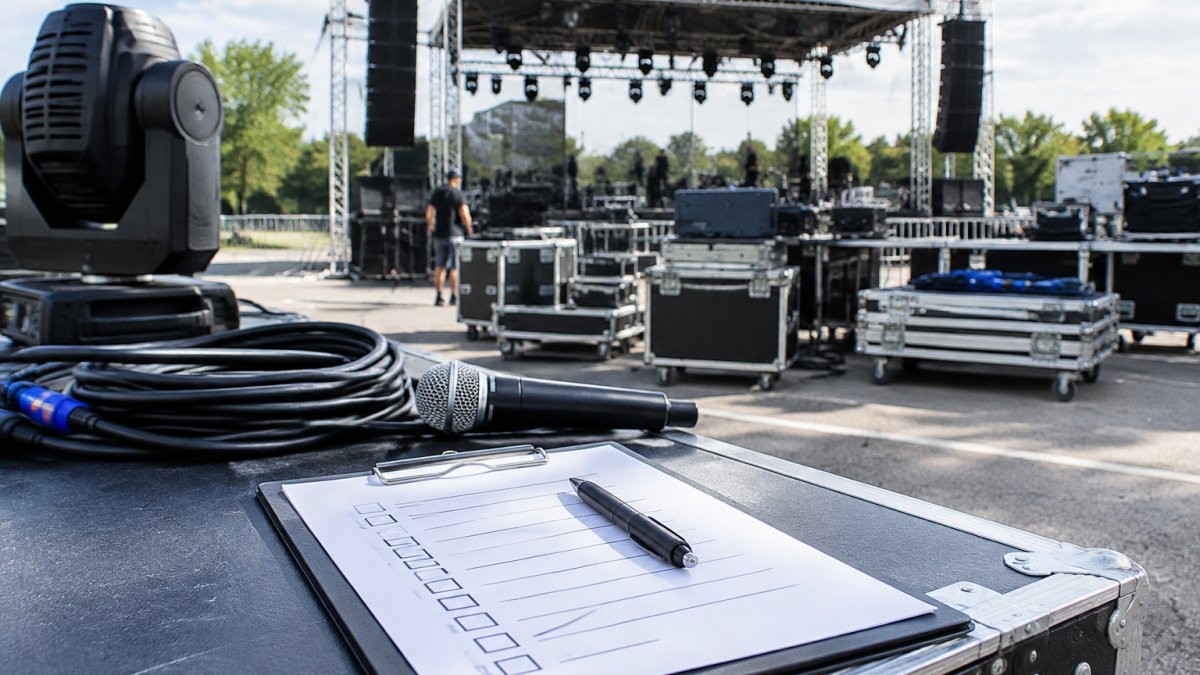
Full service production is a single company handling your event's sound, lighting, staging, and logistics from the first planning call through the final load-out. At AudioBahn Productions, we see the difference most clearly when something goes wrong at 7:55 p.m. and one team owns the fix instead of three.
The benefits of full service production companies show up at every stage: pre-production planning, on-site execution, and post-event wrap. One contract, one schedule, one crew lead who knows the whole show.
Here is how the stages break down:
- Planning: site walkthrough, equipment list, crew plan, and a run-of-show built around your program
- Pre-production: load-in schedule, power and rigging checks, sound and lighting design
- Showtime: one crew running sound, lights, and staging together
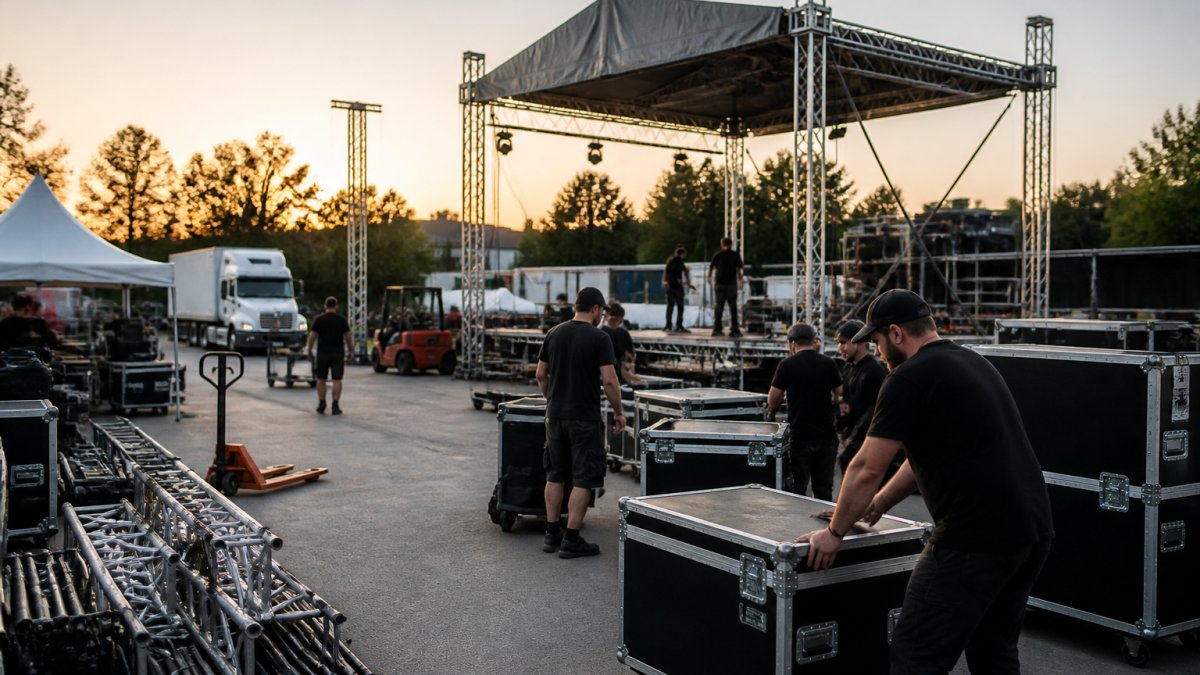
- Wrap: load-out, equipment accountability, and a debrief for next time
That structure removes the finger-pointing that eats up event days.
Event Production Planning: One Team From Concept to Showtime
The biggest mistake planners make is treating event production planning as a scheduling task. It is a coordination task. Sound, lighting, staging, and logistics all touch the same power drops, the same load-in window, and the same stage deck.
When those pieces come from separate vendors, every change ripples. One team means the lighting design accounts for where the band's risers sit, and the load-in schedule reflects what the tent crew actually needs.
A common approach is to lock the run-of-show before finalizing equipment lists. That order prevents the classic scramble where gear arrives that does not match the room.
If you are juggling several vendors right now, our guide to coordinating multiple event vendors walks through how to keep everyone on one timeline.
Event Sound and Lighting: Why Gear and Crew Belong Together
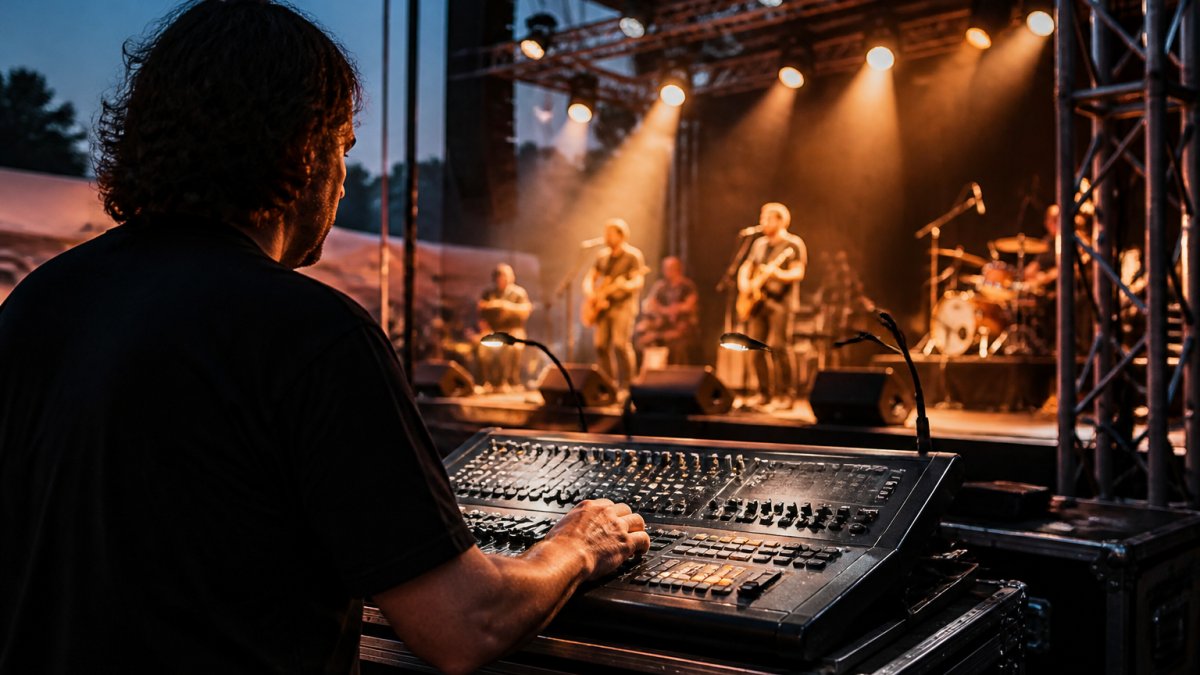
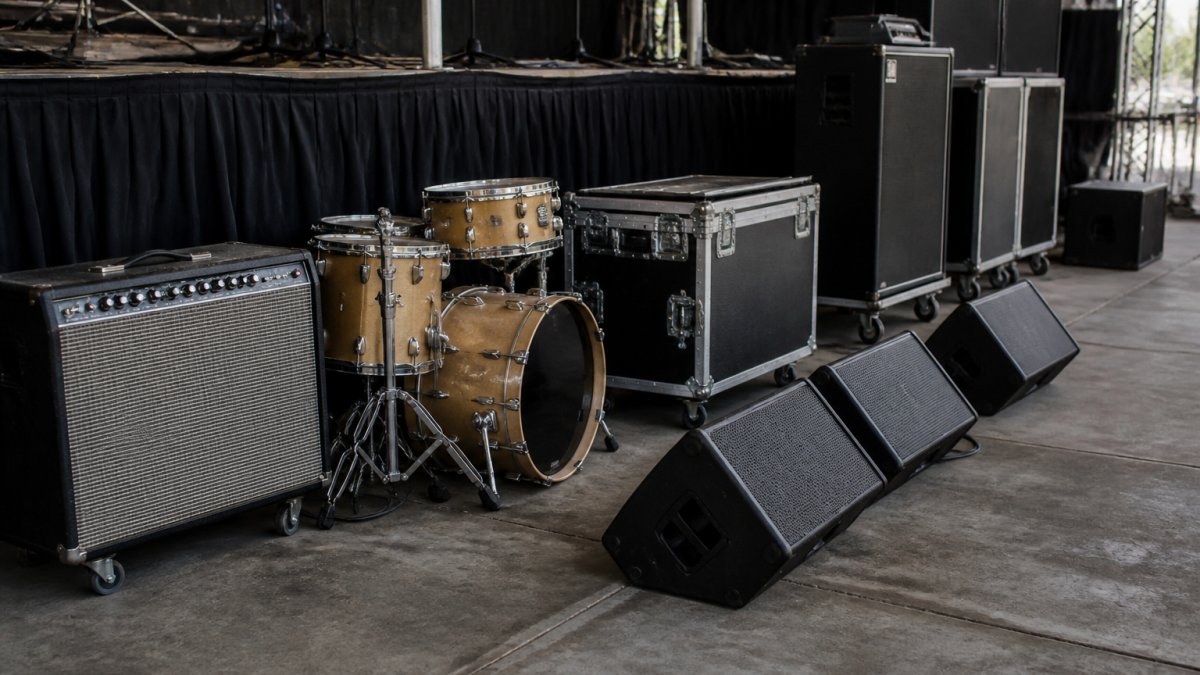
Event sound and lighting fail for one reason: the gear and the people running it were bought separately. A rental company can deliver a great PA system, but if the crew has never mixed in your room, the first twenty minutes of your program become a soundcheck.
Gear and crew belong together because the same team that specifies the system also operates it. That matters most with wireless mics, in-ear monitors, and lighting cues that sync to the program. The system designer knows which frequency bands are clear in your venue, where the sightlines fall, and which fixtures need a backup channel.
What most guides miss is the handoff problem. When the rental tech leaves and your volunteer or in-house person takes over, nobody owns the mix. One team stays through the show, and that continuity is the actual product, not the speakers.
A practical way to test a provider is to ask three operational questions before you book:
- Who owns the mix at showtime? Get the name of the on-site crew lead and confirm that person will be at your event, not just the sales contact.
- What is the backup plan? Ask specifically about a failed console, a dropped wireless mic, and a dead lighting fixture. A real partner names spare gear and a swap procedure; a gear broker changes the subject.
- How does the design account for the room? A site walkthrough should produce a sound and lighting design tied to your stage plot, power drops, and load-in window, not a generic package.
That last point is where the handoff problem gets solved before it starts. When the lighting design accounts for where the band's risers sit and the load-in schedule reflects what the tent crew actually needs, the show runs on one timeline instead of three.
You can browse PA, lighting, and wireless mic rentals with crew included, so the system and the operator arrive together.
Event Logistics Support: Tents, Restrooms, and Everything Off Stage
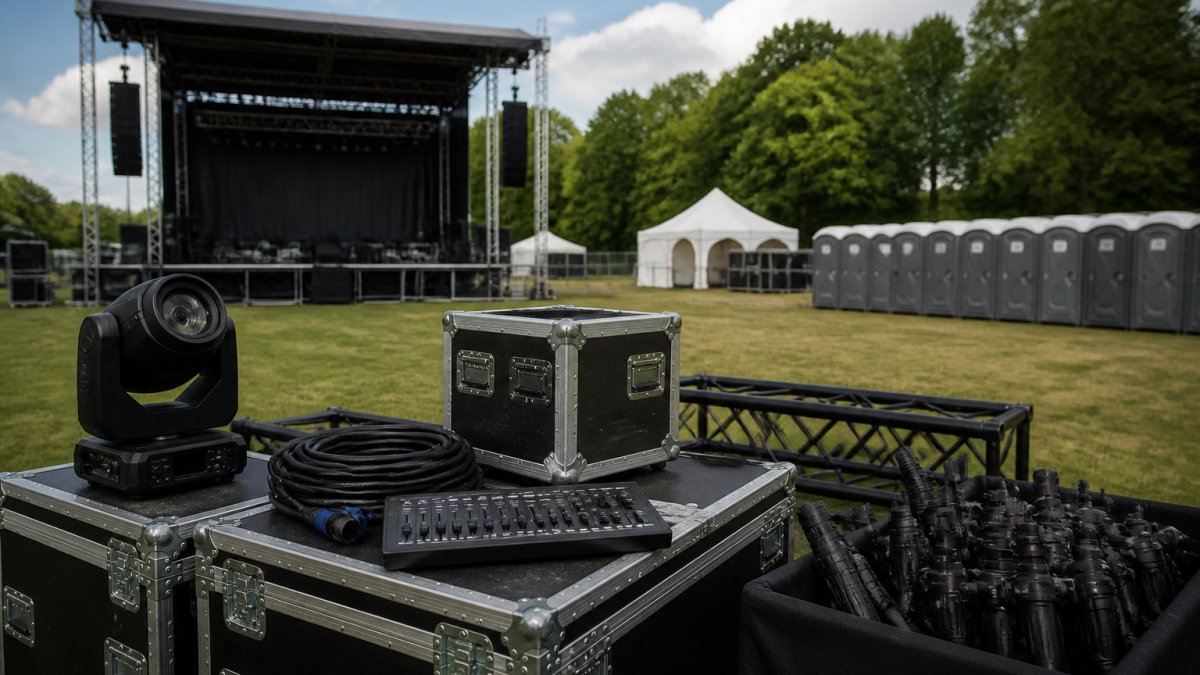
Event logistics support is the part of production that nobody films but everybody notices. Tents, restrooms, power distribution, and site layout decide whether guests are comfortable before the first note plays.
Most production companies stop at the stage edge. We are expanding into full event logistical support because planners kept asking for one call instead of five. Bathrooms, tents, and live event support belong on the same schedule as sound and lighting, not on a separate spreadsheet.
Watch out: booking restrooms and tents after the stage plot is final often forces a redesign of the site layout. Lock the footprint first, then place the stage, then place everything else.
Full Service Company vs. Freelancers, In-House Teams, and Single Vendors
The hiring model you choose shapes your risk more than any single piece of equipment. A full service production company carries the coordination burden. Freelancers, in-house teams, and single vendors each shift that burden back to you.
Here is how the models compare:
| Model | Who Coordinates | Best For | Main Trade-off |
|---|---|---|---|
| Full service company | The production partner | Multi-element events, tight timelines | Higher upfront commitment |
| Freelancers | You | Small shows with a clear plan | You manage gaps and backups |
| In-house team | Your staff | Recurring venue programs | Equipment and burnout limits |
| Single vendor | Shared | One narrow need, like sound only | Other elements stay unowned |
Freelancers can be excellent operators. The catch is that you become the project manager, and backup coverage is your problem. In-house teams know the room but rarely own enough gear for a large show.
For a deeper look at local hiring models, read our guide to hiring professional event production in Indiana.
How to Evaluate and Select a Production Partner
Ask every candidate the same four questions, and score the answers. That is the fastest way to separate a real production partner from a gear broker.
Use this checklist:
- Can they show a run-of-show and site plan from a comparable event?
- Who is the on-site crew lead, and will that person be at your show?
- What is their backup plan for a failed console, mic, or lighting fixture?
- Do they handle contracts, scheduling, and payments in one place?
- Can they support elements beyond the stage, like tents and restrooms?
- What does the load-in and load-out window look like in writing?
A common mistake is choosing on equipment list alone. The crew lead and the backup plan matter more than the brand name on the speakers.
Event Production Services That Fit Your Budget and Schedule
Budget control starts with scope, not discounts. The cheapest path is usually a clear equipment list, a realistic crew size, and a schedule that avoids rushed load-ins, but to compare quotes fairly, you need to know what actually drives the number.
Most production quotes are built from four cost drivers. Ask every provider to break their proposal into these buckets so you can compare like for like:
- Equipment: quantity and tier of PA, lighting fixtures, consoles, staging, and backline. A larger room or higher SPL requirement raises this line fast.
- Crew: headcount, roles (audio engineer, lighting designer, stagehands, crew lead), and hours including load-in, show, and load-out. Overtime and late-night load-outs are common add-ons.
- Logistics: transportation distance, power distribution, rigging, tents, restrooms, and site support. These are the lines most often quoted separately, or omitted entirely.
- Deliverables and revisions: run-of-show documents, site plans, recordings, and how many revision rounds are included before change orders apply.
A written scope should separate equipment, crew, and logistics so you can cut in the right place when the budget tightens. Cutting crew hours or backup gear is usually the wrong lever; trimming non-essential fixtures or consolidating load-in days is usually the right one.
Time savings come from the same source. One team handling scheduling, payments, and contracts removes the back-and-forth that stretches a planning cycle, and a single point of contact means change orders route through one desk instead of three.
We also offer church production services with a free walkthrough and evaluation of your system. We recommend needed upgrades only, and we train volunteer tech crews so your team can run the room between events.
Book a Free Walkthrough With AudioBahn Productions
The fastest way to see what full service production would change about your event is a walkthrough. We will review your venue, your current gear, and your program, then tell you what actually needs to change.
AudioBahn Productions handles concert sound, stage lighting, staging, backline, and equipment rentals, plus scheduling, payments, and contract administration. Portable laser tag is now available for corporate events, parties, and schools.
You can request a quote or call 574-250-2300 to talk through your date.
Frequently Asked Questions
What is a full-service event production company?
A full-service event production company handles every technical and logistical part of an event under one contract: event production planning, event sound and lighting, staging, backline, and event logistics support such as tents and restrooms. Instead of coordinating several vendors, you work with one team that schedules crew, manages equipment, and stays on site from load-in to load-out. That single point of contact reduces the gaps that appear when separate vendors hand off responsibilities.
Can one production company handle sound, lighting, staging, and logistics?
Yes. A full service production company keeps sound, lighting, staging, and logistics on one schedule so a lighting change does not conflict with a stage reset. Ask for a written scope that lists each system, who operates it, and when it is delivered. AudioBahn Productions provides concert sound, stage lighting, staging, backline, and equipment rentals, and now offers broader event logistics support for corporate events, parties, and school functions.
What should you look for when hiring an event production company?
Look for a clear scope of services, a named crew, and a schedule that covers setup, showtime, and tear-down. Ask how the company handles equipment failure mid-event and who is responsible for backups. Request examples of events similar in size and type to yours. Confirm the company serves your area and can support events outside its home region. A free walkthrough and system evaluation, like the one AudioBahn Productions offers, shows how the team plans before you sign.
How does a production company support a corporate event or wedding?
For corporate events, a production team manages event production services such as conference audio, projection, stage lighting, and scheduling so speakers and presentations run on time. For weddings, the team handles event sound and lighting for ceremonies and receptions, plus event logistics support like tents and restrooms. The benefit is one contract, one contact, and one crew that knows the full run of show instead of several vendors arriving with separate timelines.
Your next event does not need five vendors and a group chat. Get started with AudioBahn Productions and put one team on sound, lighting, staging, and logistics from concept to load-out.

Sound, lighting, staging and LED video. Free quote.
Frequently Asked Questions
What is a full-service event production company?
A full-service event production company handles every technical and logistical part of an event under one contract: event production planning, event sound and lighting, staging, backline, and event logistics support such as tents and restrooms. Instead of coordinating several vendors, you work with one team that schedules crew, manages equipment, and stays on site from load-in to load-out. That single point of contact reduces the gaps that appear when separate vendors hand off responsibilities.
Can one production company handle sound, lighting, staging, and logistics?
Yes. A full service production company keeps sound, lighting, staging, and logistics on one schedule so a lighting change does not conflict with a stage reset. Ask for a written scope that lists each system, who operates it, and when it is delivered. AudioBahn Productions provides concert sound, stage lighting, staging, backline, and equipment rentals, and now offers broader event logistics support for corporate events, parties, and school functions.
What should you look for when hiring an event production company?
Look for a clear scope of services, a named crew, and a schedule that covers setup, showtime, and tear-down. Ask how the company handles equipment failure mid-event and who is responsible for backups. Request examples of events similar in size and type to yours. Confirm the company serves your area and can support events outside its home region. A free walkthrough and system evaluation, like the one AudioBahn Productions offers, shows how the team plans before you sign.
How does a production company support a corporate event or wedding?
For corporate events, a production team manages event production services such as conference audio, projection, stage lighting, and scheduling so speakers and presentations run on time. For weddings, the team handles event sound and lighting for ceremonies and receptions, plus event logistics support like tents and restrooms. The benefit is one contract, one contact, and one crew that knows the full run of show instead of several vendors arriving with separate timelines.