Professional Concert Backline Rental Services: 2026 Guide
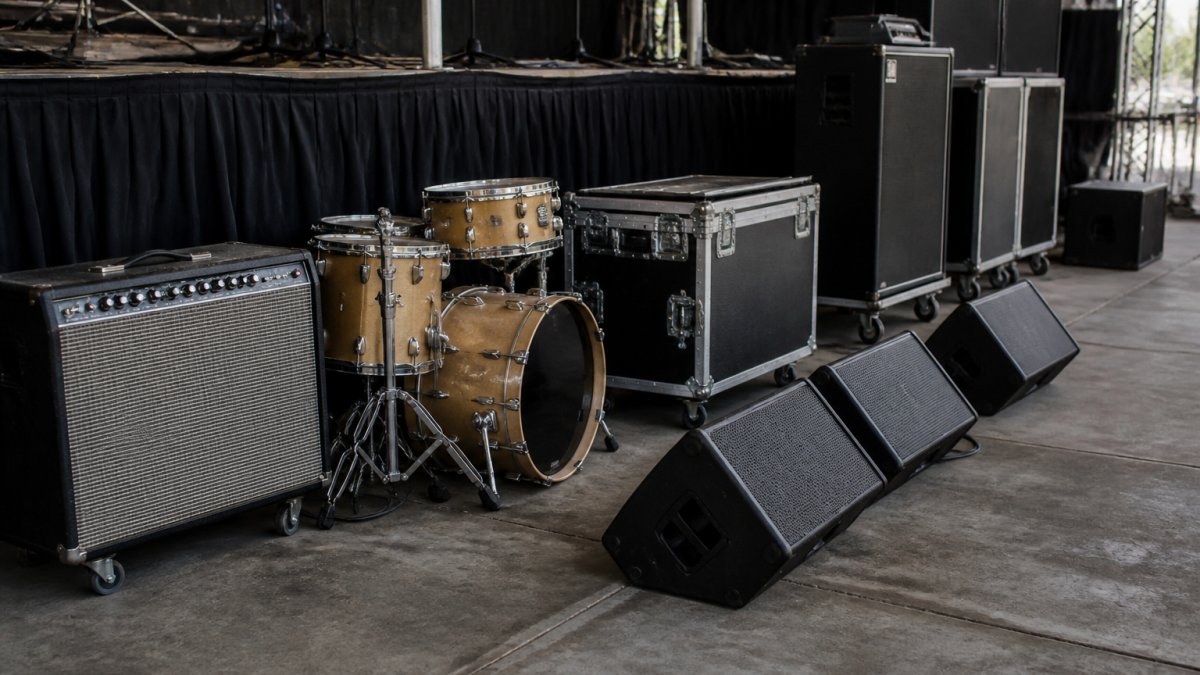
Table of Contents
- What Professional Concert Backline Rental Services Actually Cover
- Quick Comparison: Backline Rental Providers at a Glance
- Backline Rental Checklist: What to Confirm Before You Book
- Why Your Stage Plot and Input List Decide the Rental
- Backline Rental for Bands: Single Acts vs. Multi-Band Bills
- Backline Rental Delivery and Setup: What Full Service Means
- Which Provider Fits Your Event? A Decision Framework
- Conclusion
- Frequently Asked Questions
Last Updated: October 16, 2026
What Professional Concert Backline Rental Services Actually Cover
Professional concert backline rental services supply the instruments, amplifiers, drums, and stage equipment a performance needs, delivered and set up before the doors open. At AudioBahn Productions, we treat backline as one piece of a larger production plan, not a standalone equipment order. Backline is the gear the artist plays through: guitar and bass amps, drum shells and hardware, keyboards, pedalboards, and the monitors that let a band hear itself on stage.
Most first-time bookers assume backline is just "the instruments." That's the misconception that causes the most show-day scrambling. A real backline package also covers stands, cables, power distribution, and spares, because a failed cable at soundcheck is a failed show by downbeat.
Below, we break down what separates a complete backline package from a partial one, how to compare providers, and what to confirm before you sign.
Quick Comparison: Backline Rental Providers at a Glance
Providers differ less on gear lists than on what happens around the gear: delivery, setup, support, and how far they'll travel. That's the part worth comparing.
| Provider Type | Typical Strengths | Common Gaps | Best For |
|---|---|---|---|
| Full-service production company | Backline, sound, lighting, and staging under one contract | Fewer à la carte options | Multi-band bills and corporate events |
| Regional backline specialist | Deep instrument inventory | Limited lighting or staging help | Single touring acts |
| National rental marketplace | Wide gear catalog | Setup and support vary by market | One-off gear needs |
The pattern is consistent: the more moving parts your event has, the more a single point of contact matters. When backline, sound, and lighting come from three different vendors, someone has to own the handoffs. Usually that someone is you.
Backline Rental Checklist: What to Confirm Before You Book
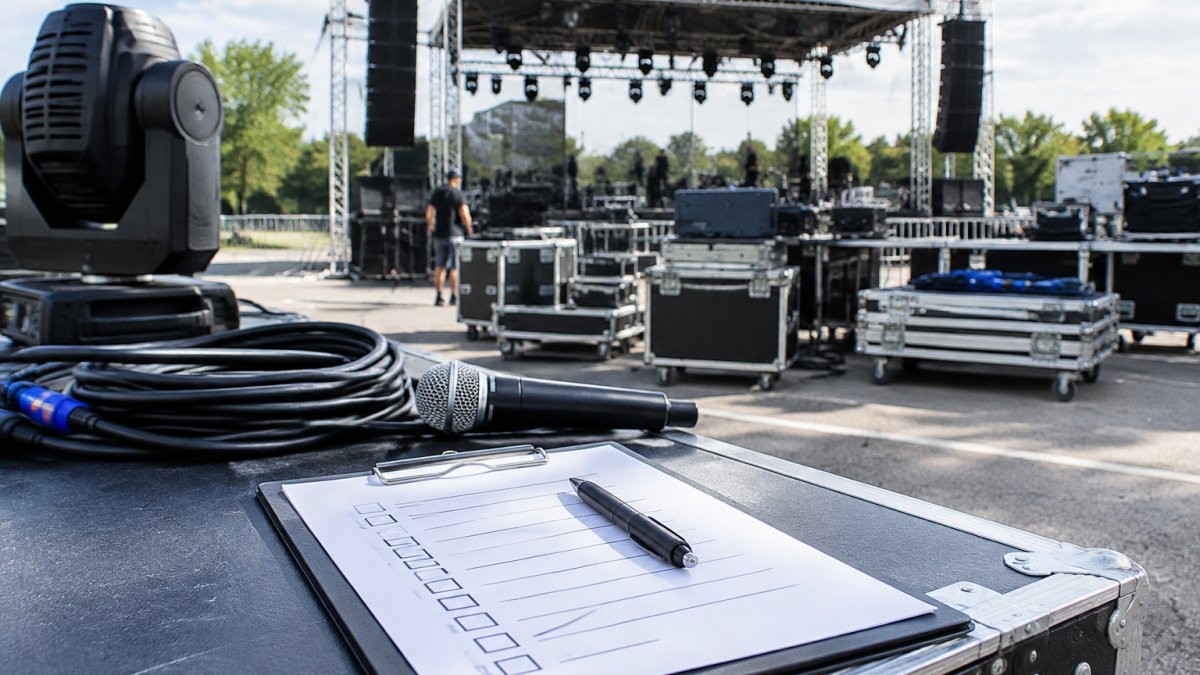
A backline rental checklist should cover equipment specs, delivery terms, support, and contingencies before you commit. Run through this every time:
- Exact make and model of every amp, drum kit, and keyboard, not just "guitar amp"
- Whether delivery, setup, and teardown are included or billed separately
- Who supplies cables, stands, power drops, and consumables like drumheads and batteries
- Spare equipment policy: what's on site if something fails mid-show
- Load-in and load-out windows matched to your venue's schedule
- Certificate of insurance and any venue-required documentation
- A named on-site contact who can be reached during the event
Why Your Stage Plot and Input List Decide the Rental
Your stage plot and input list are the two documents that determine whether the backline quote is accurate. A stage plot is a top-down diagram showing where each performer, amp, and drum riser sits. An input list is the channel-by-channel record of every microphone and line-level source feeding the console.
Send both before you request pricing. A provider quoting without them is guessing, and guesses get corrected at soundcheck when there's no time to fix anything.
A few details trip people up:
- Note which instruments are direct-injected versus mic'd
- Flag any backline that doubles as a monitor source
- Mark power needs, especially for keyboard rigs and amp stacks
- Include changeover notes if multiple acts share the stage
If your stage plot is out of date, redraw it. Fifteen minutes of sketching prevents a load-in argument.
Backline Rental for Bands: Single Acts vs. Multi-Band Bills
Backline rental for bands gets complicated the moment more than one act shares a stage. A single headliner can travel with its own gear or rent exactly what it needs. A multi-band bill forces a decision: shared backline, separate packages, or a hybrid.
Shared backline keeps changeovers fast and costs down. The tradeoff is compromise. Not every guitarist wants the same amp, and not every drummer plays the same configuration.
Separate packages give every act exactly what it wants and cost more in both gear and stage time. For a three-band bill with 20-minute changeovers, shared backline is usually the only workable answer.
Backline Rental Delivery and Setup: What Full Service Means
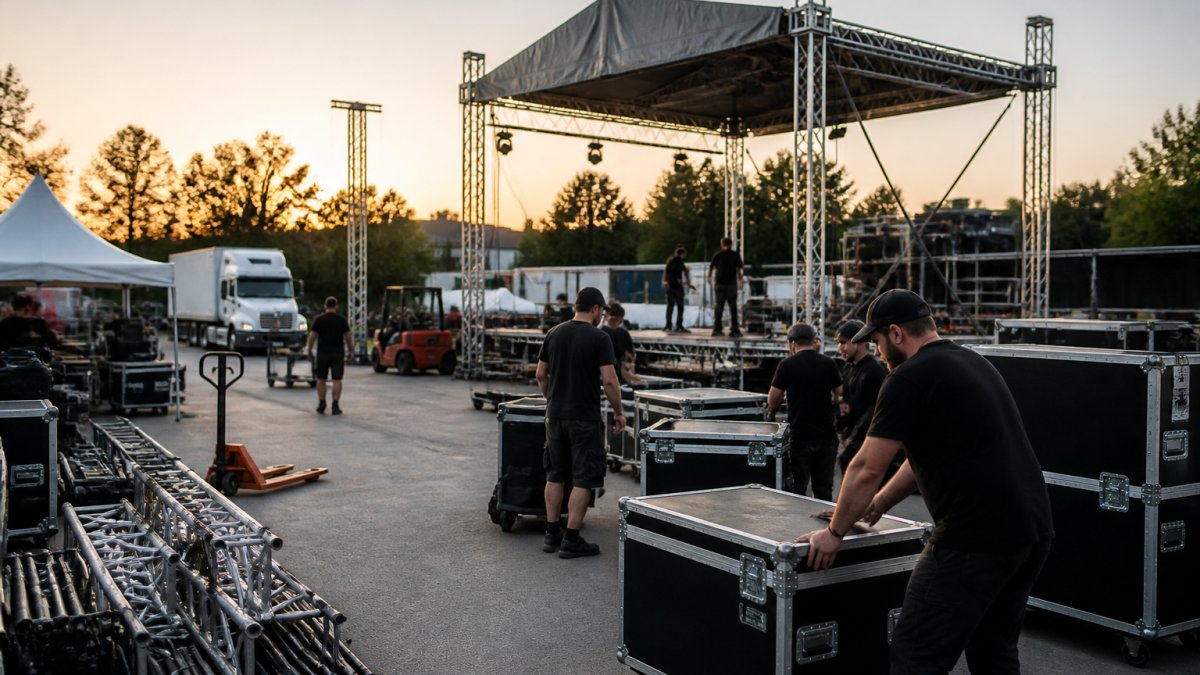
Full service means the provider handles delivery, setup, soundcheck support, and teardown, so your team never touches a flight case. That's the difference between renting equipment and renting a solution.
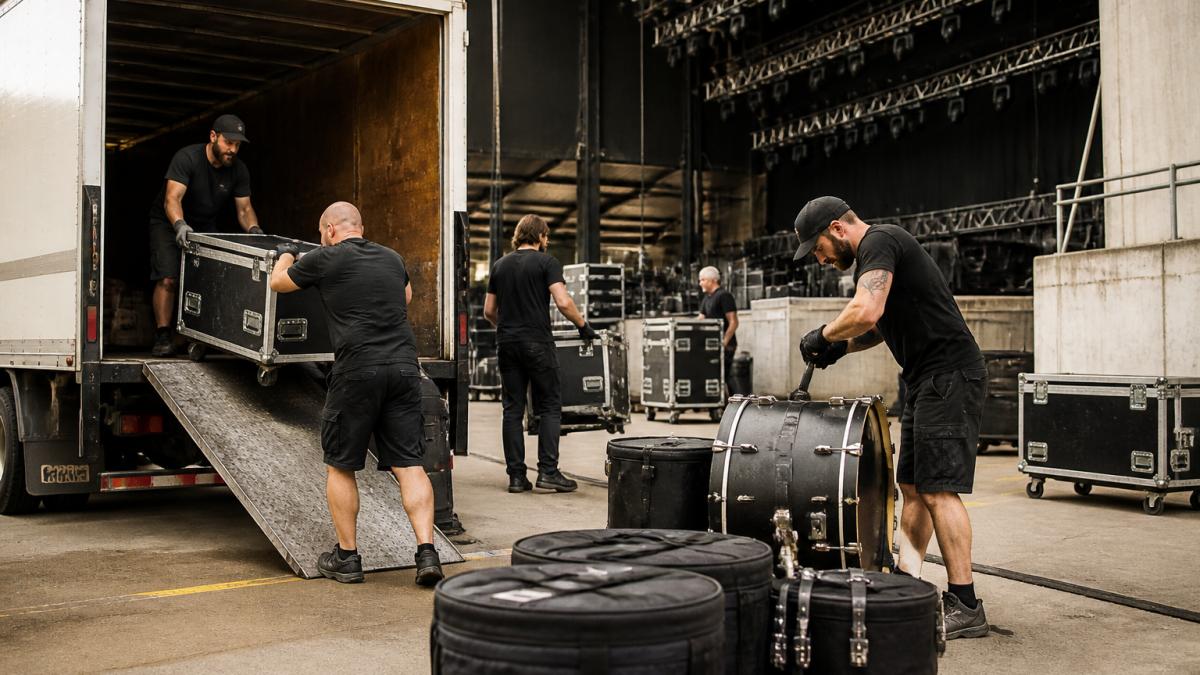
Ask any provider to define "full service" in writing. Some deliver to the dock and leave. Others place and cable everything, run a line check, and stay through the show.
What to expect from a genuinely full-service backline rental delivery and setup:
- Gear arrives at the scheduled load-in window, not "sometime that afternoon"
- A technician places and cables the backline per your stage plot
- Line check happens before the artist's soundcheck, not during it
- The crew stays reachable through the event for swaps and troubleshooting
- Teardown and load-out follow the venue's schedule
The gap between "delivered" and "set up" is where most event-day problems live.
Which Provider Fits Your Event? A Decision Framework
Match the provider to the event, not the other way around. Use these three questions:
Does the event have multiple production elements? If you need backline plus sound, lighting, or staging, a full-service production company removes the coordination burden. AudioBahn Productions handles scheduling, contracts, and payments across all of it, which means one invoice and one point of contact instead of four.
How far is the venue from the provider? Distance affects delivery windows, emergency response, and cost. A provider two hours away can't swap a failed amp in thirty minutes.
How complex is the changeover? Multi-band bills, tight festival schedules, and televised events need a provider with crew depth, not just inventory.
For corporate events, school functions, and private celebrations, the calculus shifts again. These events rarely need a full concert backline, but they often need reliable sound, staging, and lighting from a single vendor. That's a different service profile than a touring act requires, and it's worth saying so when you request a quote.
Conclusion
The hardest part of backline rental isn't finding gear. It's finding a provider who shows up on time, sets up correctly, and stays reachable when something goes wrong at 9 p.m. AudioBahn Productions manages the full production picture, from backline and concert sound to stage lighting and staging, with scheduling, contracts, and payments handled in one place. We serve the Michiana and Great Lakes region and regularly travel for events that need complete production support. Register with us and let one team own the details so your show runs the way you planned it.
Frequently Asked Questions
What equipment is included in a concert backline rental?
Backline typically covers the gear a band plays through rather than the sound system itself: drum kits and percussion, guitar and bass amplifiers, keyboards, pianos, DJ gear, and stage monitors. Inventory varies widely, so request an itemized list and match it against your stage plot and input list before signing. If a provider cannot confirm specific models, treat that as a warning sign.
Does backline rental delivery and setup cost extra?
It depends on the provider and the distance. Some quote delivery, setup, and strike as part of the rental; others bill them separately or exclude them entirely. Ask directly whether the quote covers load-in, positioning, cabling, soundcheck support, and load-out, and whether after-hours or weekend delivery changes the terms. Pricing depends on quantity, dates, and delivery distance, so confirm the full scope in writing before you commit.
How do I coordinate backline rental for bands when multiple acts share a bill?
Build one shared stage plot and input list that accounts for every act, then flag which items are shared and which are act-specific. Confirm changeover time between sets and whether the provider will supply a technician to reset gear. For festivals and multi-band shows, a single provider managing the full backline reduces the risk of mismatched equipment and gaps between sets.
What should be on a concert backline checklist?
A working checklist covers: confirmed equipment models and quantities, stage plot and input list, delivery window and load-in access, setup and strike responsibilities, power requirements, backup gear for critical items, technician contact, and a named person on site who can approve substitutions. Add a contingency line for equipment failure and agree in advance who responds and how quickly. Review the checklist with the provider at least a week out.
Should a concert rent backline or bring its own?
Touring acts usually carry their own instruments and amps because the players are attached to specific gear. One-off concerts, festivals, corporate shows, and multi-band bills often rent locally to avoid freight costs and transport risk. If your event is a single night in a region you do not regularly play, renting backline from a provider that handles delivery and setup is usually the lower-risk choice.
Sound, lighting, staging and LED video. Free quote.
Frequently Asked Questions
What equipment is included in a concert backline rental?
Backline typically covers the gear a band plays through rather than the sound system itself: drum kits and percussion, guitar and bass amplifiers, keyboards, pianos, DJ gear, and stage monitors. Inventory varies widely, so request an itemized list and match it against your stage plot and input list before signing. If a provider cannot confirm specific models, treat that as a warning sign.
Does backline rental delivery and setup cost extra?
It depends on the provider and the distance. Some quote delivery, setup, and strike as part of the rental; others bill them separately or exclude them entirely. Ask directly whether the quote covers load-in, positioning, cabling, soundcheck support, and load-out, and whether after-hours or weekend delivery changes the terms. Pricing depends on quantity, dates, and delivery distance, so confirm the full scope in writing before you commit.
How do I coordinate backline rental for bands when multiple acts share a bill?
Build one shared stage plot and input list that accounts for every act, then flag which items are shared and which are act-specific. Confirm changeover time between sets and whether the provider will supply a technician to reset gear. For festivals and multi-band shows, a single provider managing the full backline reduces the risk of mismatched equipment and gaps between sets.
What should be on a concert backline checklist?
A working checklist covers: confirmed equipment models and quantities, stage plot and input list, delivery window and load-in access, setup and strike responsibilities, power requirements, backup gear for critical items, technician contact, and a named person on site who can approve substitutions. Add a contingency line for equipment failure and agree in advance who responds and how quickly. Review the checklist with the provider at least a week out.
Should a concert rent backline or bring its own?
Touring acts usually carry their own instruments and amps because the players are attached to specific gear. One-off concerts, festivals, corporate shows, and multi-band bills often rent locally to avoid freight costs and transport risk. If your event is a single night in a region you do not regularly play, renting backline from a provider that handles delivery and setup is usually the lower-risk choice.