Full Service Event Production for Weddings: 2026 Guide
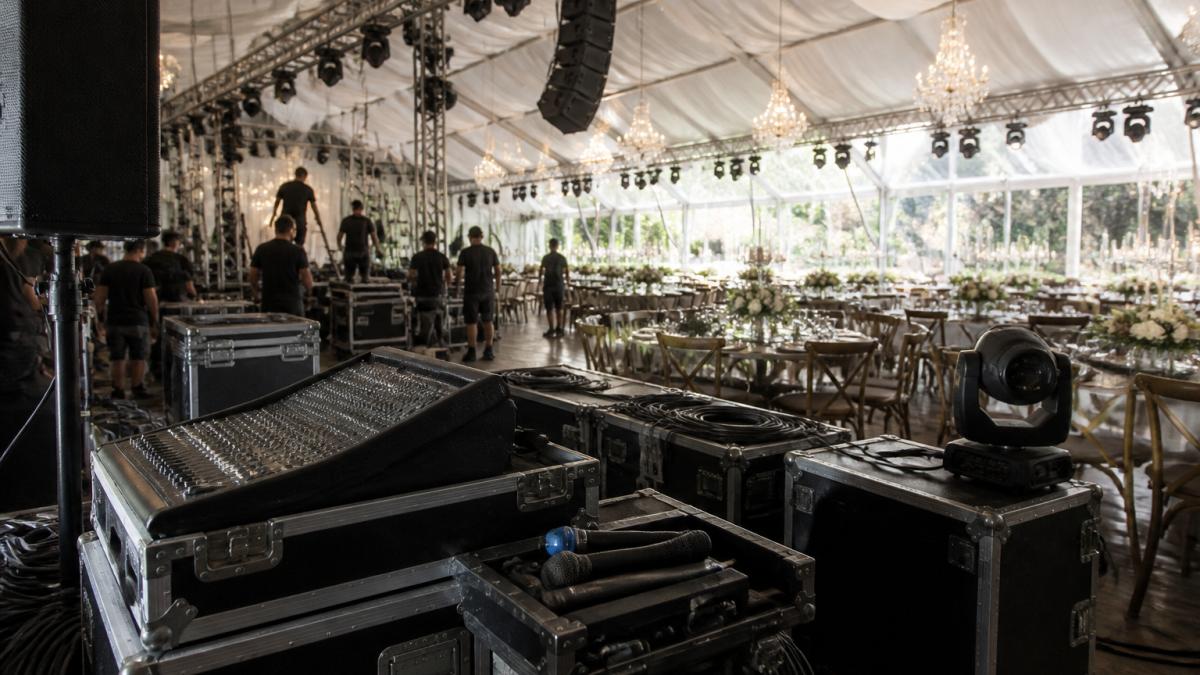
Table of Contents
- What Full Service Event Production for Weddings Actually Covers
- Wedding Production Services Cost: What Drives Your Budget
- Benefits of Professional Wedding Lighting and Sound
- Audio-Visual, Lighting, and Custom Fabrication Services
- Logistics, Vendor Coordination, and Load-In to Load-Out
- How to Choose an Event Production Company for Your Wedding
- Post-Production, Wrap-Up, and Sustainable Practices
- Conclusion: Building Your Production Timeline
- Frequently Asked Questions
Last Updated: October 7, 2026
What Full Service Event Production for Weddings Actually Covers
Full service event production for weddings covers the technical and operational build behind the celebration: audio, lighting, staging, power, rigging, and the crew that runs it all.
At AudioBahn Productions, we work with couples, planners, and venues across the Great Lakes region, and the same confusion shows up in almost every first call. Couples assume their planner handles the technical side.
That gap is where weddings go wrong.
Production vs. Planning: The Technical Breakdown
Event production is the design, supply, installation, and operation of the technical systems a wedding depends on. Planning is the scheduling, budgeting, and coordination of the day itself.
The two overlap, but they are not the same job:
- Planning: timeline, vendors, contracts, guest logistics, ceremony order
- Production: sound reinforcement, lighting design, staging, power distribution, rigging, crew scheduling
- Planning asks: who walks when?
A planner can tell you the first dance happens at 8:15. A production team makes sure 400 guests can actually hear the song.
Wedding Production Services Cost: What Drives Your Budget
Pricing for wedding production services depends on scope, venue, guest count, and how much technical work you hand over. No two quotes look alike, but the line items inside them are consistent, and knowing them is how you compare bids.
What a Production Quote Actually Contains
Every dollar on a professional quote should trace back to one of these lines:
- Equipment rental, priced per unit per day. A wireless handheld mic, a powered speaker, an LED uplight, a moving-head fixture, and a truss section each carry their own rate for a single event day with a load-in/load-out window.
- Labor, billed hourly, per technician, with a minimum call (often four hours). Load-in, show operation, and load-out are separate line items on good quotes.
- Design and pre-production, lighting plots, CAD layouts, site surveys, and programming time. This is the line budget-conscious couples cut and later regret.
Realistic Ranges by Scope
Exact figures vary by market, venue, and season, but these tiers reflect how most full-service production companies in the U.S. structure packages. Treat them as planning bands, not quotes:
Scope Level | Typical Guest Count | What's Included | Planning Band |
|---|---|---|---|
Ceremony-only audio | Up to 150 | 2 wireless mics, 1 speaker on stand, 1 technician for ceremony hour | Low four figures |
Reception essentials | 100-200 | DJ or band reinforcement, 8-16 uplights, dance floor wash, 1 technician all night | Mid four figures |
Full design build | 200-350 | Custom lighting plot, moving fixtures, staging, rigging, 2-3 technicians, site survey | High four figures to low five figures |
Large-scale / multi-day | 350+ | Full rig, generators, custom fabrication, multi-crew, multi-venue logistics | Five figures and up |
A 60-guest backyard ceremony and a 400-guest tented reception in the same city can differ by an order of magnitude. The room, not the guest count, sets the floor.
Where the Money Actually Goes
Budget Area | What It Covers | What Changes the Cost |
|---|---|---|
Equipment | Speakers, mics, lights, staging, cabling | Quantity and specification level |
Labor | Setup crew, on-site technicians, strike crew | Crew size and event length |
Design | Lighting plots, layout planning, site survey | Complexity of the look you want |
Logistics | Transport, load-in windows, power access | Venue distance and access limits |
Most couples are surprised that labor, not gear, is often the largest line. Equipment is rented once and used all night; a crew has to be there the whole time, and a tight load-in window or long carry from the loading dock can double labor hours before a single light gets hung.
The Hidden Cost Drivers
Four things blow up budgets more than anything else, and none appear on a brochure:
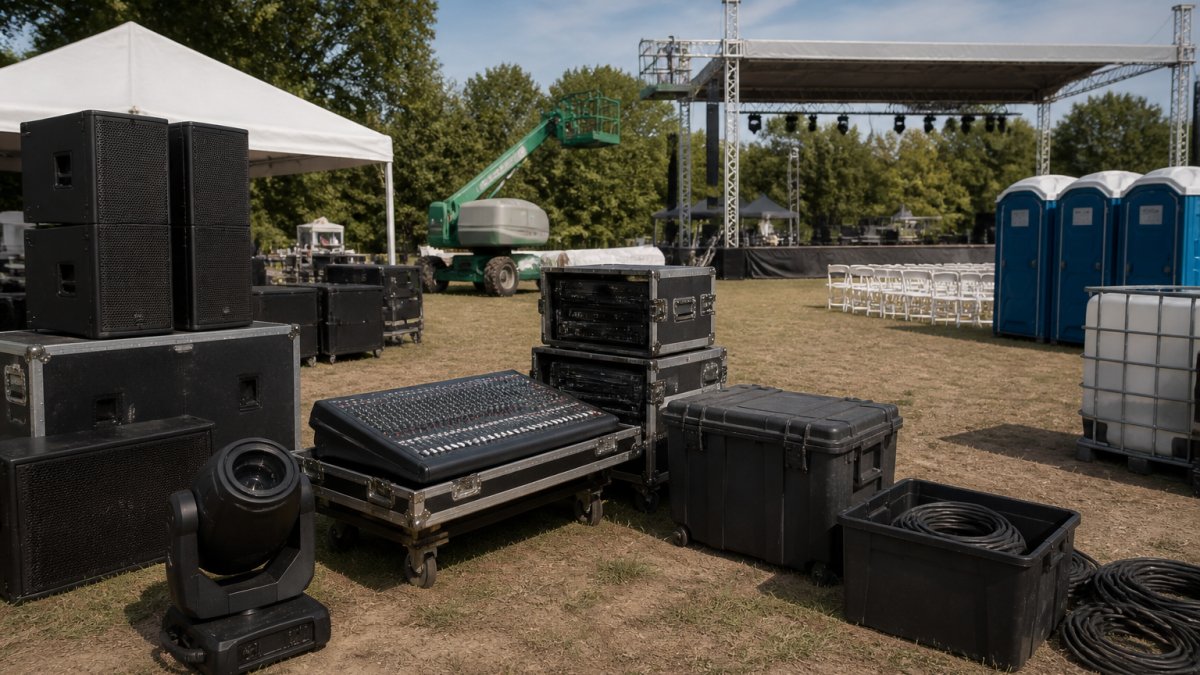
- Power capacity. A room that can't support the band, the uplighting, and the caterer at once means a generator, a distro, and a fuel plan.
- Rigging access. A ballroom with engineered rigging points is cheap to fly from. A tent with no rigging points means ground-support truss and more labor.
- Load-in windows. A two-hour window forces a bigger crew. A six-hour window lets a smaller crew work at a lower rate.
- Venue rules. Some venues require their own in-house AV, union stagehands, or a licensed electrician on site. Those fees are real and non-negotiable.
How to Compare Two Quotes Fairly
Two quotes for the same wedding can differ by thousands of dollars and both be "correct", because they price different scopes. To compare apples to apples, ask each company to break out equipment, labor, design, and logistics separately, and to state whether load-in, load-out, and on-site technician hours are included or billed separately. A cheaper quote almost always has a line item missing.
Because every venue and guest count changes the math, pricing depends on quantity, dates, and delivery. Current rates and packages are on our website, and we'll walk you through exactly what's included before you commit.
Benefits of Professional Wedding Lighting and Sound
Professional lighting and sound change how a wedding feels and how smoothly it runs, well beyond looking good in photos.
- Clarity: properly placed speakers mean every toast is heard, even at the back tables
- Mood control: uplighting shifts the room from ceremony to reception without moving a single chair
- Photo quality: good lighting design flatters faces and eliminates harsh shadows in every shot
The last point matters more than couples expect. When a wireless mic drops during vows, the difference between a professional team and a rented speaker is whether someone is standing there to fix it.
Audio-Visual, Lighting, and Custom Fabrication Services
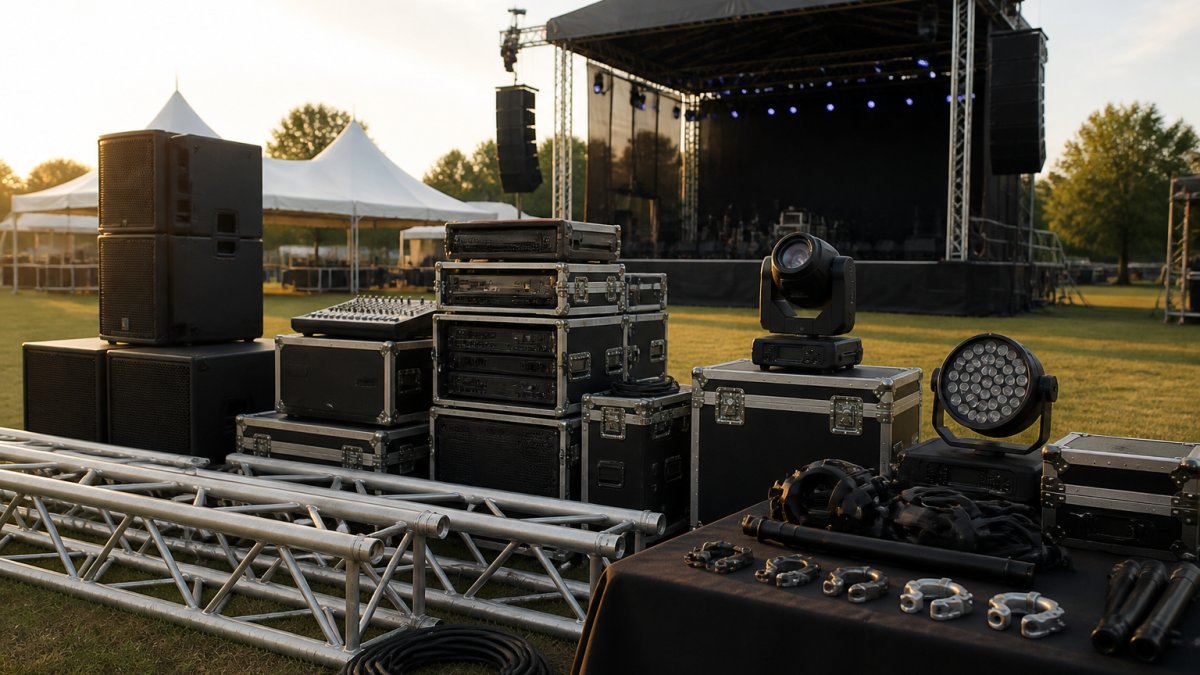
Audio-visual, lighting, and fabrication services cover everything from the microphone at the altar to the custom stage the band performs on, the physical systems that carry the ceremony and the party.
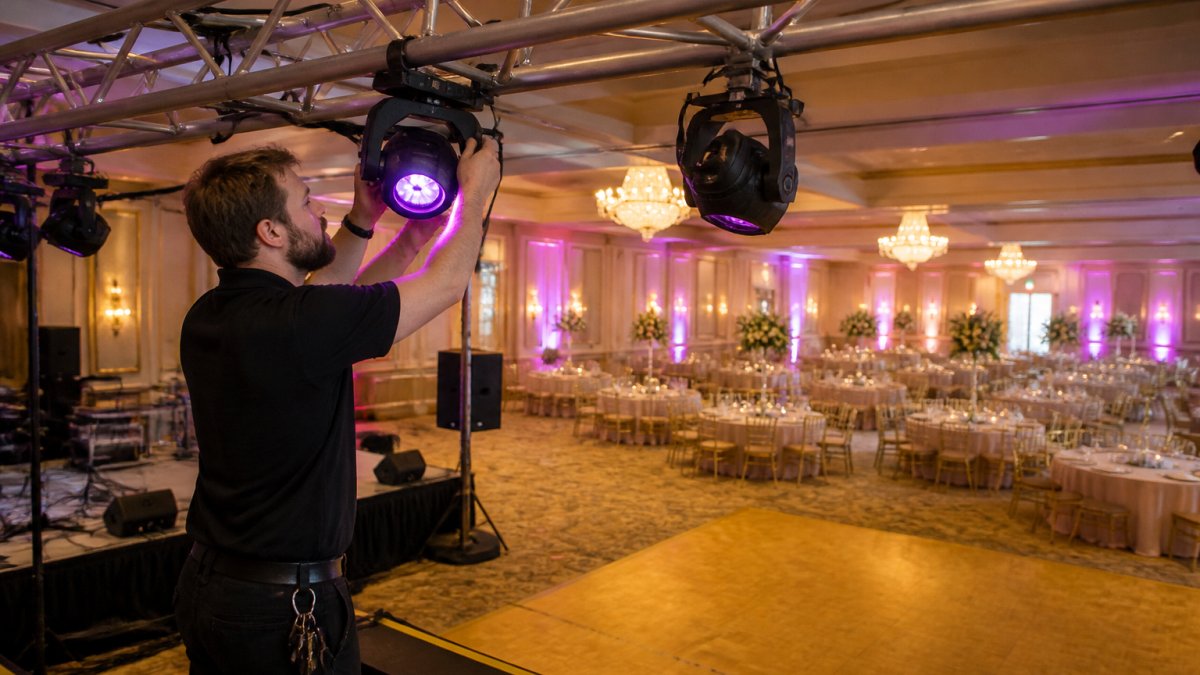
A typical wedding production package includes:
- Audio: ceremony mics, DJ or band sound reinforcement, wireless systems for officiants and toasts
- Lighting: uplighting, pinspots, dance floor wash, and architectural accent lighting
- Custom fabrication: built staging, custom backdrops, and branded elements when the venue doesn't provide them
Staging, Rigging, and Event Infrastructure
Staging, rigging, and infrastructure are the structural layer that holds everything else up. A stage gives the band a defined performance area. Rigging suspends lighting and speakers safely overhead. Infrastructure covers the power distribution, cabling, and cable management that keeps the floor safe and trip-free.
This is the part of production guests never notice, which is exactly the point.
Logistics, Vendor Coordination, and Load-In to Load-Out
Logistics and vendor coordination determine whether the day runs on schedule or falls behind before the first guest arrives. Production logistics covers the timeline, delivery windows, load-in, load-out, and communication with every other vendor on site.
Here's how a typical production day flows:
- Site survey and planning: confirm power, access, and layout weeks in advance
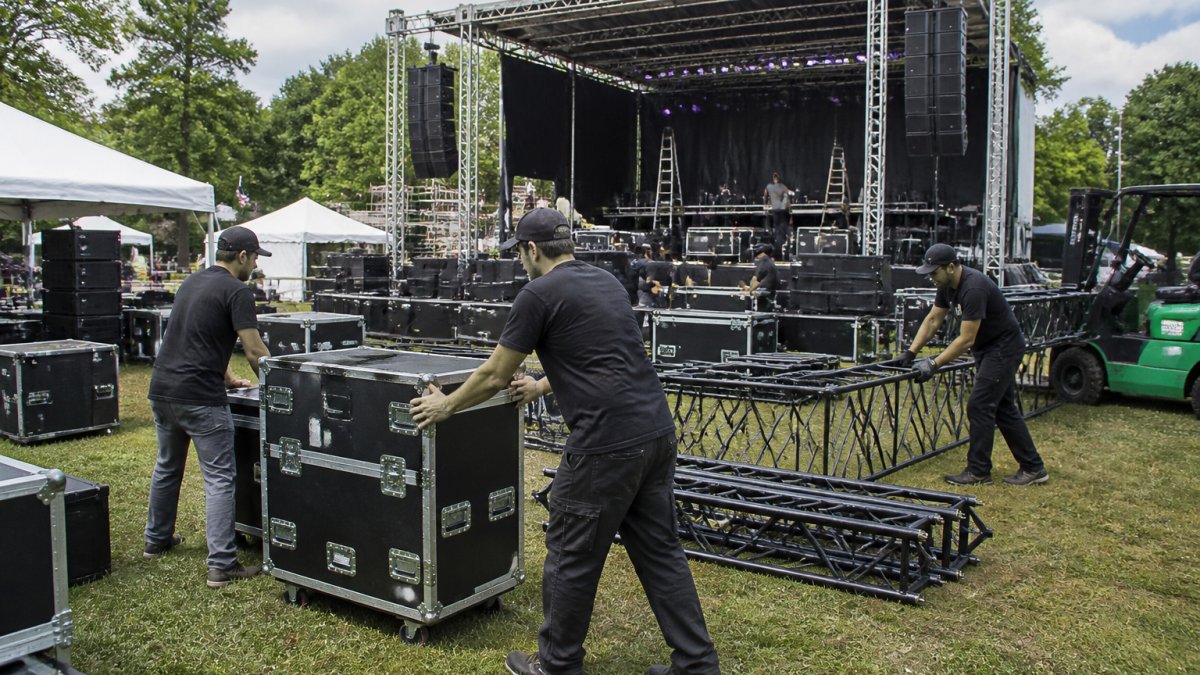
- Load-in: crew arrives early, often before the caterer, to build staging and rig
- Sound check: test audio and lighting before doors open
- Event operation: a technician stays on site through the entire event
- Load-out: strike equipment after guests leave, within the venue's window
Vendor coordination means the photographer knows where not to stand, the caterer knows where the power runs, and the band knows when the room goes dark for the first dance.
How to Choose an Event Production Company for Your Wedding
Choosing an event production company comes down to four checks: proof of similar events, a site survey before quoting, a named on-site technician, and a clear written scope.
Questions worth asking every company you consider:
- Can you show examples of weddings at venues like ours?
- Who is the technician on site, and are they there for the whole event?
- What happens if a speaker or light fails mid-show?
That last question matters if your venues span multiple states. AudioBahn Productions serves the Michiana and Great Lakes region, so a wedding in one city and a reception in another isn't a problem.
Risk Management and Contingency Planning
Risk management is the part of production most couples never see, and it's why professional teams exist. Contingency planning means having a backup for every critical system before the event starts.
In practice, that looks like:
- Redundant audio: spare microphones and cables on site, not in a truck across town
- Power backup: a plan for what happens if a circuit trips mid-toast
- Weather contingencies: covered staging and protected cable runs for outdoor ceremonies
When something fails, the question isn't whether it can be fixed. It's who is responsible and how fast they respond. A production contract should state that clearly.
Post-Production, Wrap-Up, and Sustainable Practices
Post-production is the phase almost no wedding production article covers, and it's where the difference between a professional team and a rental drop-off becomes obvious. The event ends when the last guest leaves; the production doesn't.
What Happens After the Last Dance
A structured wrap-up runs in four stages, and each one has a deliverable:
- Strike. Crew breaks down staging, rigging, lighting, and audio in reverse order of install, within the venue's contracted load-out window. Cables are coiled and labeled, not thrown in bins.
- Venue restoration. Floors swept, tape pulled, gaff residue removed, furniture returned to its pre-event position. This protects your security deposit and your venue relationship.
- Asset reconciliation. Every piece of rented or owned gear is checked back in against the pull sheet. Missing or damaged items get flagged the same night, not three weeks later when the invoice arrives.
- Post-event review. A short debrief covering what worked, what didn't, and what to change if there's a next event. For multi-day or multi-venue weddings, this is where the crew captures notes that make day two run cleaner than day one.
Why This Phase Protects Your Money
Most production contracts include a damage and loss clause. If gear goes missing during load-out and no one reconciles the pull sheet, that cost lands on the client.
The same logic applies to venue damage. A crew that documents the room's condition before load-in and after load-out has a record if the venue later claims damage that wasn't theirs.
Sustainability in Practice, Not Slogans
Eco-conscious weddings are growing, and production is one of the few line items where sustainability is measurable rather than marketing. The practical levers:
- LED fixtures over incandescent. LED units draw a fraction of the power of older incandescent pars, smaller distros, fewer generators, lower fuel use outdoors.
- Reusable staging and rigging. Modular decking, truss, and drape systems get used hundreds of times. Single-use scenic builds get thrown away after one night.
- Digital programs and signage. Replacing printed menus, programs, and seating charts with projection or LED displays cuts paper waste and often costs less than custom printing.
None of these are exotic. They're standard inventory decisions that a production company either makes or doesn't, and you can ask directly which ones they use.
A clean load-out is also a signal. A crew that leaves the room better than it found it is usually a crew that ran the event the same way.
Conclusion: Building Your Production Timeline
The hardest part of wedding production isn't the equipment. It's the coordination, the timing, and knowing who's accountable when something slips.
AudioBahn Productions handles that entire layer for you: scheduling, payments, contract administration, and concert sound, stage lighting, staging, backline, and equipment rentals from load-in to load-out.
Get started with AudioBahn Productions and walk into your wedding day knowing the technical side is already handled.
Frequently Asked Questions
What is the difference between a wedding planner and an event production company?
A wedding planner manages your overall timeline, vendor bookings, and guest logistics. An event production company handles the technical side: audio-visual equipment, stage lighting, staging, rigging, and on-site execution. Full service event production for weddings means the production team owns the technical infrastructure from site survey through load-out. Many couples need both roles filled, and some production companies coordinate directly with your planner to keep the event flow seamless.
How much should you budget for professional wedding production?
Wedding production services cost depends on guest count, venue size, and how much equipment you need. Pricing also varies by date, delivery distance, and setup complexity. Request a quote from your production company with your venue details and guest count so they can build an accurate budget allocation for you.
When should you hire a full service production team for your wedding?
Book your production team six to twelve months before the event date, especially for peak season weddings. That window gives time for a site survey, design conceptualization, equipment sourcing, and production schedule planning. If your venue requires rigging, custom staging, or complex audio-visual setups, hiring earlier gives your team room to coordinate with the venue and other vendors without rushing the installation plan.
What happens if equipment fails during the wedding?
A professional production company brings backup gear and a crew on site for the duration of the event. Ask any provider how to choose an event production company by their contingency planning: redundant microphones, spare cables, backup power considerations, and a named point of contact who can respond during the event. The production crew stays through load-out, so equipment issues get handled in real time rather than waiting on an off-site technician.
Sound, lighting, staging and LED video. Free quote.
Frequently Asked Questions
What is the difference between a wedding planner and an event production company?
A wedding planner manages your overall timeline, vendor bookings, and guest logistics. An event production company handles the technical side: audio-visual equipment, stage lighting, staging, rigging, and on-site execution. Full service event production for weddings means the production team owns the technical infrastructure from site survey through load-out. Many couples need both roles filled, and some production companies coordinate directly with your planner to keep the event flow seamless.
How much should you budget for professional wedding production?
Wedding production services cost depends on guest count, venue size, and how much equipment you need. Pricing also varies by date, delivery distance, and setup complexity. Request a quote from your production company with your venue details and guest count so they can build an accurate budget allocation for you.
When should you hire a full service production team for your wedding?
Book your production team six to twelve months before the event date, especially for peak season weddings. That window gives time for a site survey, design conceptualization, equipment sourcing, and production schedule planning. If your venue requires rigging, custom staging, or complex audio-visual setups, hiring earlier gives your team room to coordinate with the venue and other vendors without rushing the installation plan.
What happens if equipment fails during the wedding?
A professional production company brings backup gear and a crew on site for the duration of the event. Ask any provider how to choose an event production company by their contingency planning: redundant microphones, spare cables, backup power considerations, and a named point of contact who can respond during the event. The production crew stays through load-out, so equipment issues get handled in real time rather than waiting on an off-site technician.